Glimpse:
Recent research and applications of artificial intelligence in IVF are giving badly needed boosts to success rates. AI models trained on tens of thousands of embryo images even those taken at specific stages for example, 110 hours post-fertilization can classify embryo quality with far greater consistency than human observers. These systems analyze morphological features, growth timing, and developmental changes to predict implantation potential. Meta-analyses show AI tools achieving sensitivity and specificity in the 60-70% range, which, while not perfect, is a significant improvement over purely visual or manual grading methods. Clinics using AI-assisted embryo selection, follicle monitoring, and treatment personalization are reporting fewer failed cycles and more confidence in which embryos to transfer.
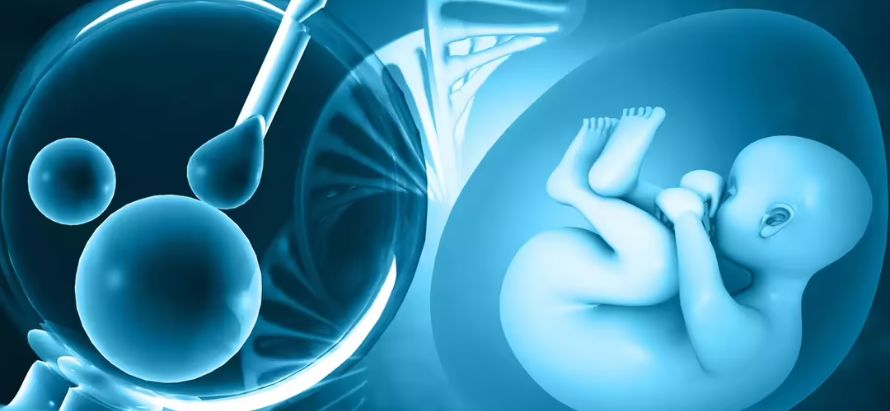
In the world of IVF, picking the right embryo can feel a little like rolling dice hoping that the one chosen will stick, develop, and lead to a pregnancy. What if the odds could be shifted more deliberately, using AI trained on thousands of embryo photos.
That’s what a growing number of studies are showing. AI models trained on large datasets of embryo images captured at precise timepoint are enabling embryologists to “see” things that are hard to detect with naked eyes. Features like cell symmetry, patterns of division, subtle morphological changes, and kinetics of growth become inputs into algorithms that try to predict which embryos are most likely to implant successfully.
For example, an algorithm called Stork was trained on over 12,000 embryo images, all taken at a fixed time after fertilization, to distinguish “good quality” vs “poor quality” embryos. It reported very high accuracy in classifying embryos. In one study, embryos with >58% chance of progressing were considered good <35%, poor. The AI achieved classification accuracy close to 97% for those categories. From studies of similar nature.
Optimizing when to trigger final maturation of eggs by recognizing the optimal follicle sizes not just the largest follicles. A large multi-clinic dataset (19,000+ cycles) showed that follicles in the 13-18 mm range on trigger day correlate better with retrieval of mature eggs and live birth rates.
Integrating patient history, hormone levels, and clinical context with image data to better predict outcomes, avoiding cycles that are unlikely to succeed, and customizing stimulation protocols.
Reducing subjectivity: manual grading is influenced by expert bias, fatigue, and image quality. AI, once trained well, offers consistency, repeatability, and can “learn” subtle signals that humans often miss.
Of course, there are caveats: AI models must be trained on representative datasets diverse patient ages, varying lab settings. Image quality, ethical regulation, and ensuring transparency so doctors and patients understand “why” an embryo is scored a certain way are all critical. Plus, these tools are not magic they augment, not replace, the skill of embryologists.
Still, for many couples, this kind of technology represents hope: fewer failed cycles, fewer emotional and financial burdens, and a reduced waiting game. If IVF clinics in India and globally scale up quality AI-assisted tools, this could be a tipping point in fertility care.