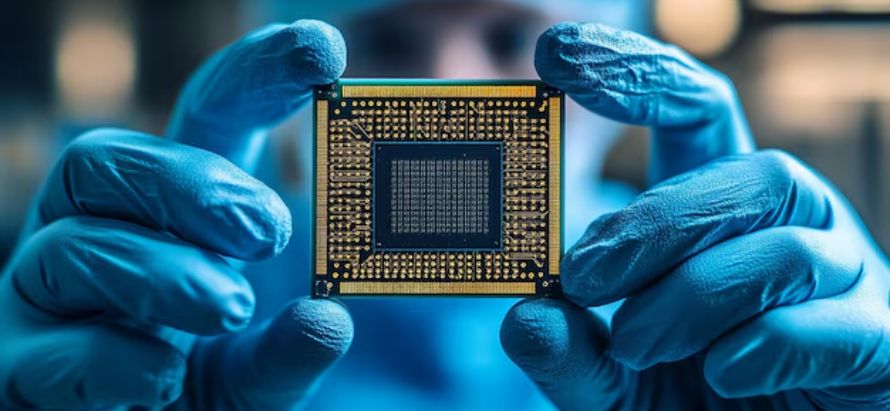
A research team at the Indian Institute of Science (IISc) Bengaluru has engineered a cutting-edge biomedical signal processing chip that can interpret health data in real time with high energy efficiency a development that may significantly impact wearable devices, remote monitoring systems and point-of-care diagnostics.
Traditional biomedical analysis often requires off-device computing or cloud connectivity, leading to delays, increased power consumption and privacy challenges. The newly developed semiconductor, however, integrates advanced processing capabilities directly into the hardware, enabling rapid interpretation of vital signals such as electrocardiograms (ECG), electroencephalograms (EEG), pulse and respiratory patterns.
By handling signal processing on-chip, the design reduces the need for continuous data transmission and heavy external computation, which can improve battery life, reduce latency and support real-time decision-making in health systems. This makes the chip especially suitable for wearable health monitors, smart patches, portable health devices and embedded AI health systems where speed and efficiency are critical.
IISc researchers said the innovation is grounded in custom architecture that optimises both analog and digital pathways, enabling precise feature extraction and pattern recognition with minimal energy overhead. Such improvements could empower affordable, ubiquitous health monitoring particularly in settings with limited connectivity or resource constraints.
The chip’s real-time processing strengths also create opportunities for AI-enabled diagnostics, where local, low-latency analysis can trigger alerts, behavioural suggestions, anomaly detection and clinician notifications without waiting for cloud-based computation.
The development is part of a broader push in India’s research ecosystem to create indigenous hardware solutions tailored for healthcare needs, reducing reliance on imported components and supporting the country’s goals in digital health innovation.