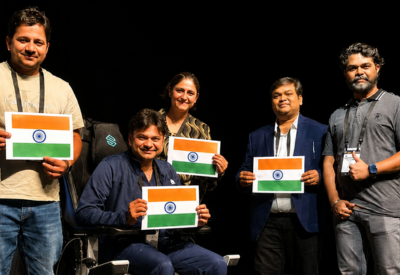
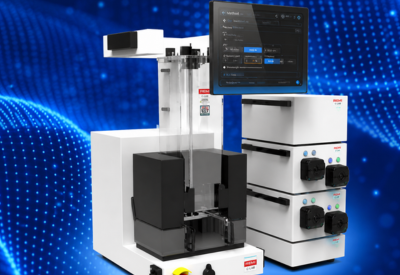
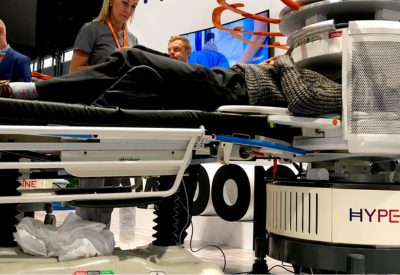
In an extraordinary leap for remote healthcare, a team from the All India Institute of Medical Sciences (AIIMS) in New Delhi has conducted live ultrasound examinations on volunteers stationed over 13,000 kilometers away at India’s Maitri research base in Antarctica. This pioneering use of telerobotic technology allows doctors to control a robotic arm equipped with an ultrasound probe from the comfort of Delhi, while receiving clear, real-time diagnostic images for immediate clinical assessment.
The demonstration took place during AIIMS Research Day 2026 and was led by Prof (Dr) SH Chandrashekhara, who remotely operated the system to perform a variety of scans. These included abdominal ultrasounds, trauma assessments, cardiac imaging, Doppler studies, and neck examinations. Despite the vast geographical separation and Antarctica’s extreme cold, isolation, and limited medical infrastructure, the image quality proved sufficient for confident clinical decision-making.
The telerobotic ultrasound system was jointly developed by AIIMS New Delhi and IIT Delhi in 2022, with further refinements for durability and precision in harsh conditions. Key support came from the I-Hub Foundation for Cobotics (IHFC), the National Centre for Polar and Ocean Research (NCPOR), and the Rajiv Gandhi Super Speciality Hospital. Researchers Udayan Banerjee and Siddharth Gupta played crucial roles in the installation and technical setup at the Antarctic station. The idea for deployment in polar regions originated from Dr Vikas Dogra, drawing from his prior experience with the Indian Antarctic Programme.
In environments like Antarctica, where medical emergencies such as acute abdominal pain, trauma, or cardiac issues can arise without immediate specialist access, delays in diagnosis can be life-threatening. This telerobotic approach bridges that gap by bringing expert radiological guidance directly to remote frontline teams, potentially reducing the need for risky evacuations and enabling faster interventions.
The technology builds on India’s previous telemedicine milestones, including the country’s first telerobotic-assisted coronary artery bypass grafting surgery over 286 km. Experts see broad future applications beyond Antarctica, including disaster-struck areas, high-altitude regions, offshore platforms, and rural parts of India where specialist care is scarce.
While currently in testing mode, the system’s success signals a transformative shift in how healthcare can reach the most isolated corners of the world.