Glimpse:
Prima processes complete brain MRIs in seconds, achieving up to 97.5% accuracy in detecting neurological abnormalities and assigning triage urgency. Evaluated on over 30,000 studies spanning 50+ diagnoses, it integrates imaging with clinical context to suggest differential diagnoses, referrals, and prioritization. The model, published in Nature Biomedical Engineering (February 2026), handles diverse scans without narrow training sets offering a scalable solution for faster, more consistent neuroimaging in busy clinical settings.
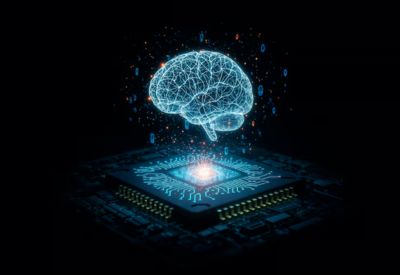
A powerful new AI model from the University of Michigan can interpret an entire brain MRI scan and generate clinically meaningful diagnoses in mere seconds, according to a study published in Nature Biomedical Engineering. Named Prima, the vision-language model was trained on health system-scale data—over 200,000 studies and millions of sequences incorporating both images and patient context like history and ordering notes.
In a year-long real-world evaluation involving nearly 30,000 MRI exams, Prima demonstrated superior performance across more than 50 radiologic diagnoses. It achieved a mean AUC of 92% and hit peak accuracies up to 97.5% for key conditions, while also flagging urgency levels to guide triage such as identifying strokes or other emergencies requiring immediate attention. Unlike many task-specific AI tools, Prima excels on diverse, unlabeled, or varied scans, making it robust for everyday clinical use.
The technology addresses growing pressures on radiology departments: rising MRI volumes, radiologist shortages, and the need for rapid yet reliable reads. By providing instant preliminary assessments, differential suggestions, and referral recommendations, Prima could accelerate workflows, reduce diagnostic delays, and support overburdened teams without replacing human expertise.
Researchers highlight Prima’s potential beyond neurology, including applications in broader medical imaging. As global MRI demand surges, tools like this offer a path toward faster, more equitable access to high-quality neuroimaging interpretation.