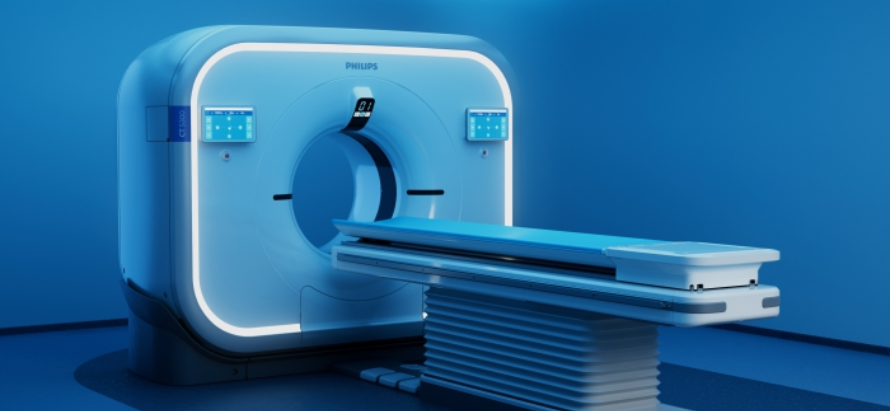
Philips has launched Rembra CT, a new computed tomography platform designed to dramatically increase scan speed, reduce radiation dose, and improve patient throughput while maintaining exceptional image quality. The system targets high-volume hospitals, emergency departments, and outpatient imaging centres facing growing demand for faster, safer CT scans particularly in regions with limited scanner availability or high patient loads.
Glimpse:
Unveiled on January 28, 2026, Rembra CT features Philips’ latest AI-powered reconstruction engine, ultrafast gantry rotation, and advanced dose modulation to deliver up to 40% faster scan times and 30% lower radiation dose compared to previous-generation systems. Early installations in select European and Asian hospitals report 25–35% higher daily throughput, improved patient comfort (shorter breath-holds), and better diagnostic confidence in time sensitive cases (stroke, trauma, cardiac emergencies). The scanner is now commercially available in key markets, with India rollout planned for mid-2026.
Royal Philips has officially introduced Rembra CT, its newest computed tomography platform engineered to address the dual challenges of rising imaging demand and the need for lower radiation exposure. The launch, announced on January 28, 2026, positions Rembra as a high-throughput, patient-friendly solution for hospitals and imaging centres under pressure to scan more patients faster without compromising diagnostic quality.
Key innovations in Rembra CT include:
- Ultrafast gantry rotation (up to 0.25 seconds per rotation) for rapid acquisition of cardiac, trauma, and whole-body scans
- AI-driven reconstruction algorithms that maintain or exceed current image quality at significantly reduced dose levels
- Intelligent dose modulation and automatic exposure control tailored to patient size, anatomy, and clinical indication
- Streamlined workflow with one-touch protocols, automated post-processing, and seamless PACS/RIS integration
- Enhanced patient comfort features (wider bore, quieter operation, shorter breath-hold times) to reduce motion artefact and anxiety
In early clinical evaluations at partner sites in Europe and Asia, Rembra demonstrated 25–35% higher daily scan throughput, 30% average dose reduction across routine protocols, and improved visualisation of subtle pathologies (e.g., small pulmonary nodules, early stroke signs, coronary plaque) thanks to lower noise and better contrast to noise ratio at reduced dose.
Philips Diagnostic Imaging Leadership stated: “Demand for CT imaging continues to grow rapidly, especially in emergency and oncology settings, yet radiation safety and scanner availability remain critical concerns. Rembra CT delivers the speed, dose efficiency, and image quality hospitals need to scan more patients safely and confidently expanding access to timely diagnostics without compromising care.”
The system is designed for easy installation in existing CT suites (with minimal downtime) and supports Philips’ broader ecosystem of AI tools for automated pathology detection (stroke, lung nodules, PE), quantitative analysis, and workflow orchestration. It is now commercially available in Europe and select Asia-Pacific markets, with regulatory clearance and rollout in India targeted for mid-2026.
The launch aligns with global trends toward faster, lower dose imaging driven by ageing populations, rising chronic disease prevalence, and increasing emphasis on radiation safety (ALARA principles). For high volume centres in India, Rembra’s throughput and dose advantages could help address long waiting times and enable broader preventive screening programmes.