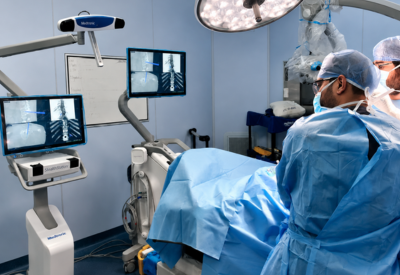
The HIMSS 2026 Global Health Conference & Exhibition showcased enterprise-grade AI deployment as a dominant theme, with major focus on cybersecurity resilience and automation of hospital finance operations. Sessions, product launches, and keynotes highlighted how health systems are scaling AI for clinical decision support, revenue cycle optimization, threat detection, and financial forecasting while addressing regulatory, ethical, and security challenges in an increasingly connected healthcare landscape.
Glimpse:
HIMSS 2026 featured over 1,200 exhibitors and 45,000+ attendees, with AI-powered tools dominating the show floor from ambient clinical documentation and predictive analytics to automated claims processing and cyber defense platforms. Cybersecurity sessions emphasized zero-trust architectures, medical device security, and ransomware preparedness amid rising attacks on healthcare. Finance automation solutions demonstrated 30–60% reductions in manual RCM tasks, faster reimbursement cycles, and improved denial management through AI. Key discussions centered on responsible AI governance, interoperability, and ROI in a post-2025 regulatory environment.
The HIMSS 2026 Global Health Conference & Exhibition, held in Las Vegas from March 3–6, 2026, firmly established enterprise AI deployment as the defining trend in healthcare IT. With record attendance exceeding 45,000 professionals and more than 1,200 exhibitors, the event showcased how health systems, payers, and technology vendors are moving beyond pilot projects to large-scale, production-ready AI implementations across clinical, operational, and financial domains. Keynote speakers and hundreds of sessions repeatedly highlighted AI’s role in reducing clinician burnout through ambient documentation, accelerating diagnostics via imaging and pathology analysis, and optimizing revenue cycles through intelligent claims processing and denial prediction.
Cybersecurity emerged as a parallel critical focus, driven by relentless attacks targeting healthcare organizations. Multiple sessions and vendor demos emphasized zero-trust architectures, continuous monitoring of connected medical devices, ransomware simulation exercises, and AI-powered threat detection that identifies anomalous behavior in real time. Presenters shared recent breach case studies and stressed the growing risk of supply-chain attacks and IoT vulnerabilities in hospitals, with several solutions demonstrating automated patch management, device inventory mapping, and rapid incident response capabilities aligned with HHS 405(d) and emerging global standards.
Hospital finance automation captured significant attention on the show floor, with vendors unveiling AI agents that handle end-to-end revenue cycle tasks from eligibility verification and prior authorization to charge capture, claims scrubbing, denial appeals, and payment posting. Early adopter health systems reported 30–60% reductions in manual touchpoints, faster clean claim rates, lower denial write-offs, and improved net collection performance. These tools integrate natively with major EHRs and emphasize compliance with CMS interoperability rules, prior authorization reforms, and value-based care metrics.
Throughout the conference, a recurring theme was the need for responsible AI governance. Panels and keynotes addressed explainability, bias mitigation, data privacy under evolving regulations, clinician-in-the-loop design, and ROI measurement. Attendees explored how health systems are balancing innovation speed with safety and equity, particularly as AI moves into high-stakes areas like clinical decision support and resource allocation. HIMSS 2026 also featured strong international representation, with global health leaders discussing how lessons from U.S. deployments can inform scalable solutions in emerging markets facing similar workforce shortages and rising chronic disease burdens.
The event closed with optimism about AI’s potential to create more efficient, resilient, and patient-centered healthcare systems provided organizations invest in people, processes, and ethical frameworks alongside the technology. HIMSS 2026 solidified AI, cybersecurity, and financial automation as interconnected priorities shaping the future of healthcare delivery worldwide.