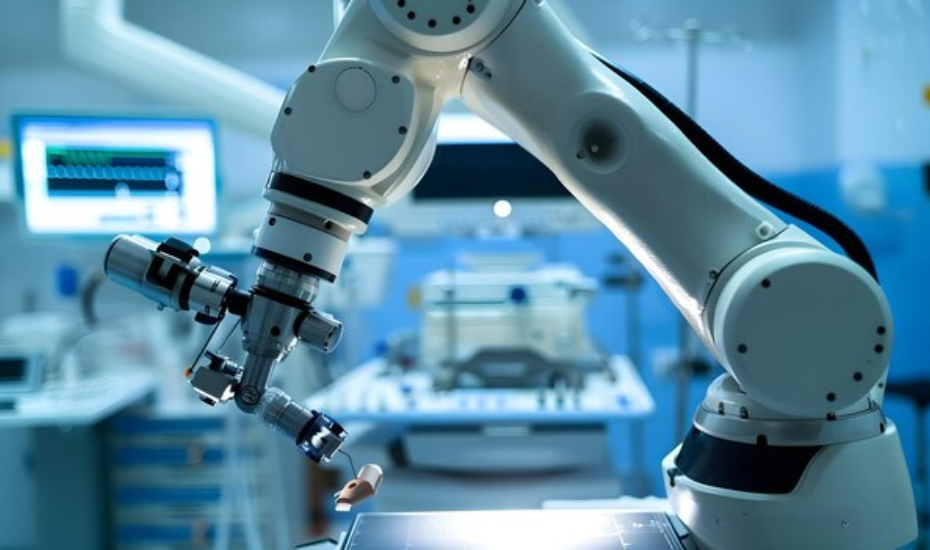
India’s medical robotics sector is rapidly transforming healthcare delivery, with robotic assisted surgeries, AI-powered medical systems, rehabilitation robots, and automated hospital technologies becoming increasingly common across leading healthcare institutions. Industry reports and healthcare experts indicate that India is emerging as one of the fastest growing medical robotics markets globally, driven by rising demand for precision surgery, minimally invasive procedures, and advanced patient care technologies.
According to recent market studies, India’s medical robotics market was valued at nearly $170–200 million in 2025 and is projected to grow at over 20% CAGR through the next decade. Analysts expect the market to cross $800 million by 2033 as hospitals accelerate investments in robotic surgery systems, AI-driven diagnostics, rehabilitation technologies, and automated healthcare infrastructure.
One of the biggest transformations is happening in robotic assisted surgery. Hospitals are increasingly adopting robotic platforms for urology, orthopaedics, cardiology, oncology, and gynaecology procedures because they improve surgical precision, reduce complications, minimize blood loss, and shorten patient recovery time. Indian medical technology companies are also entering the sector with locally developed robotic systems designed to make advanced surgery more affordable and accessible.
Domestic innovation is becoming a major growth driver. Companies such as Meril, SS Innovations, and Articulus Surgical are developing indigenous robotic surgery platforms that aim to reduce India’s dependence on expensive imported systems. Recent innovations include AI-integrated robotic systems, telesurgery platforms using 5G connectivity, mobile robotic surgical units, and remotely operated surgical technologies for rural and emergency healthcare delivery.
Experts say robotics is not limited to operating theatres anymore. Hospitals are increasingly using robotics and automation in pharmacy operations, rehabilitation therapy, diagnostics, and patient monitoring. AI-powered retinal scanning systems, robotic rehabilitation exoskeletons, automated diagnostic tools, and smart dialysis systems are helping improve healthcare efficiency and patient outcomes.
Government policies and manufacturing incentives are also supporting the sector’s expansion. India’s Production Linked Incentive (PLI) scheme for medical devices, combined with rising investments in healthcare infrastructure and digital health ecosystems, is encouraging local manufacturing and research in advanced medical technologies.
Healthcare leaders believe robotic technologies could significantly improve access to specialised care in tier-2 and tier-3 cities, where shortages of highly specialised surgeons and advanced infrastructure remain major challenges. Affordable indigenous systems are expected to play a key role in expanding robotic healthcare access beyond metro cities.
However, experts also caution that widespread adoption still faces challenges such as high installation costs, lack of trained robotic surgeons, infrastructure limitations, cybersecurity concerns, and regulatory standardisation. Medical institutions are now increasingly focusing on robotic surgery training programmes and AI-integrated healthcare education to prepare healthcare professionals for the next phase of digital medicine.
Industry observers say India’s healthcare ecosystem is gradually shifting from traditional treatment models toward precision driven, AI-assisted, and technology enabled care. The combination of robotics, artificial intelligence, telemedicine, and digital health infrastructure is expected to reshape how surgeries, diagnostics, rehabilitation, and long term patient management are delivered in the coming years.