Glimpse:
Uttar Pradesh has embedded AI into routine operations across clinical services, logistics, and public health monitoring in its public healthcare system, serving more than 240 million people. Key highlights include India’s first government hospital-based AI Clinic at GIMS Greater Noida, AI-integrated telemedicine hubs developed with IIT Kanpur, predictive disease surveillance, supply chain analytics for over 30,000 facilities, and upcoming digital AYUSH platforms. The Uttar Pradesh AI Mission commits ₹2,000 crore to scale these efforts, focusing on early detection, reduced administrative burdens, and equitable access in rural and underserved areas, while training healthcare workers in AI ethics and applications.
Uttar Pradesh, India’s most populous state with over 240 million residents, has taken a decisive step toward transforming public healthcare by integrating artificial intelligence at scale across its extensive network of facilities. Moving beyond pilot projects, the government has embedded AI tools into everyday clinical, logistical, and monitoring operations, making it one of the largest government-led AI deployments in Indian healthcare.
The push is anchored by the Uttar Pradesh AI Mission, which commits around ₹2,000 crore to integrate AI solutions statewide. This aligns with the national India AI Mission and builds on prior infrastructure gains, including new medical colleges, upgraded hospitals, and expanded digital platforms under Ayushman Bharat and state health programs.
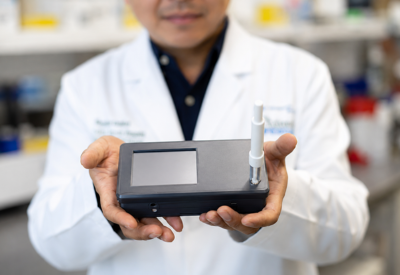
A flagship initiative is India’s first government hospital-based AI Clinic at the Government Institute of Medical Sciences (GIMS) in Greater Noida. Operating through the GIMS Centre for Medical Innovation, the clinic enables AI developers to test and validate diagnostic tools in real-world clinical environments. In collaboration with IIT Kanpur, the state is deploying AI-enabled telehealth hubs, point-of-care diagnostic devices, and population health analytics to support remote consultations, reduce diagnostic variability, and extend specialist care to districts with limited resources. A digital AYUSH platform is also in development to facilitate online consultations in traditional medicine.
AI applications span multiple domains: In diagnostics, tools assist in radiology, pathology, and lab analysis to automate pattern recognition and shorten reporting times. Public health surveillance leverages AI under the Integrated Disease Surveillance Programme for early outbreak detection and rapid response. Supply chain management uses data analytics to optimize drug and equipment procurement and inventory across 75 districts and over 30,000 facilities. Additional efforts include UP-IMRAS for streamlining clinical trials and broader population health analytics.
The government is also prioritizing training, offering online courses to doctors on AI applications, ethics, and patient safety. These measures address longstanding challenges like workforce shortages, service gaps in rural areas, and administrative inefficiencies, aiming to deliver faster, more accurate, and inclusive care.
Officials envision Uttar Pradesh as the healthcare capital of India and a global partner in health innovation, with the AI Mission serving as a blueprint for ethical, scalable adoption nationwide.