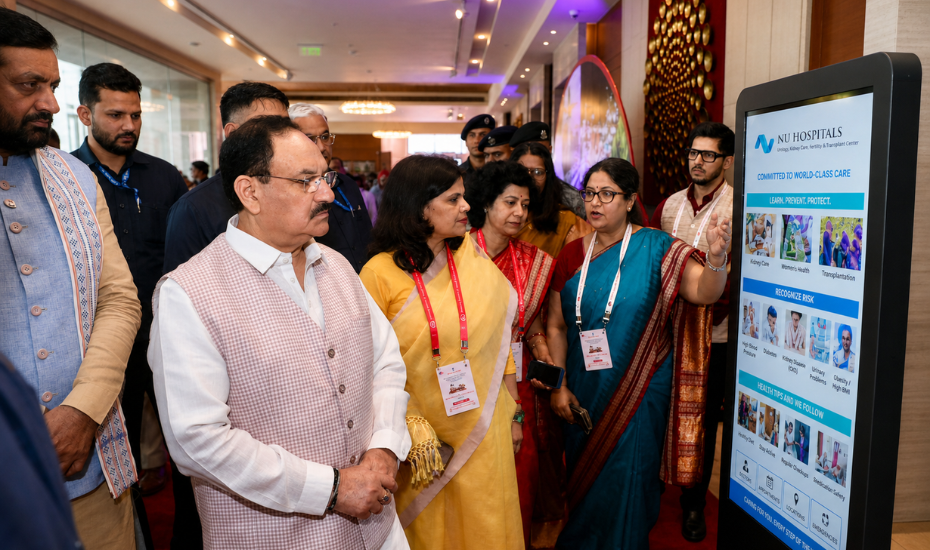
Union Health Minister J. P. Nadda and Haryana Chief Minister Nayab Singh Saini have jointly emphasized the need to accelerate AI-led Accessibility In India’s Public Healthcare Systems, highlighting technology as a key driver for inclusive and efficient care.
Speaking at a recent public health event, the leaders underscored how artificial intelligence can help Bridge Gaps In Healthcare Delivery, particularly in underserved and rural regions. By integrating AI into diagnostics, patient management, and health data systems, governments can ensure faster, more accurate, and widely accessible medical services.
A major focus of the discussion was the role of AI in Early Disease Detection, Predictive Healthcare, And Resource Optimization. AI-powered tools can assist doctors in identifying diseases at an early stage, managing patient loads, and improving decision making ultimately reducing pressure on already stretched public healthcare infrastructure.
The leaders also highlighted the importance of Digital Health Platforms And Data Integration, which can enable seamless access to patient records, improve coordination among healthcare providers, and enhance the overall quality of care. These efforts align with India’s broader push under initiatives like the Ayushman Bharat Digital Mission, which aims to create a unified digital health ecosystem.
Additionally, there was a strong emphasis on Capacity Building And Infrastructure Development, ensuring that healthcare workers are trained to effectively use AI tools and that systems are equipped to support digital transformation.
This push reflects a growing recognition that Technology Especially AI Will Play A Central Role In The Future Of Public Healthcare, helping governments deliver more equitable, efficient, and patient centric services across the country.