Glimpse:
The Bharat Cancer Genome Atlas (BCGA), hosted at bcga.iitm.ac.in, provides a curated, anonymized collection of genetic variants from Indian patients with paediatric leukaemia, colorectal cancer, and pancreatic cancer. Developed under the Indian Cancer Genome Programme (started in 2020) with principal support from Hyundai Motor India’s Hyundai Hope for Cancer initiative (₹56 crore funding plus ₹3 crore for treatment aid), the database uses whole-genome sequencing from nationwide samples. It fills critical gaps in India-specific genomic data, supports early diagnosis, disease tracking, and novel drug targets, amid rising cancer incidence (12.8% annual increase since 2022 per ICMR). Collaborators include Karkinos Healthcare, KK Childs Trust Hospital, Institute of Child Health, and others, with broader efforts including screening camps and training.
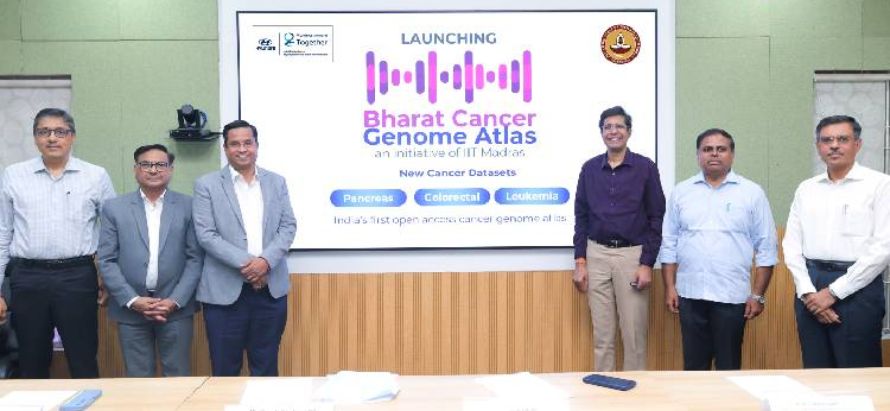
The Indian Institute of Technology Madras (IIT Madras) has unveiled a groundbreaking resource: India’s first comprehensive genome database specifically for paediatric leukaemia, colorectal cancer, and pancreatic cancer. Announced and released on World Cancer Day, February 4, 2026, by Director Prof. V. Kamakoti, the Bharat Cancer Genome Atlas (BCGA) is now openly accessible at bcga.iitm.ac.in to researchers and clinicians in India and globally.
This milestone stems from the Indian Cancer Genome Programme, initiated in 2020 by the National Cancer Tissue Biobank at IIT Madras. Researchers completed whole-genome sequencing on patient samples collected across the country using standardized protocols, creating anonymized summaries of genetic variants unique to contemporary Indian cancer cases. The database integrates with the Bharat Cancer Genome Grid (BCG2), a clinician-focused effort to responsibly embed whole-genome sequencing into routine oncology practice.
Key cancers targeted paediatric leukaemia, colorectal, and pancreatic—were chosen for their high burden and clinical relevance. The BCGA enables identification of India-specific biomarkers for early detection, monitoring disease progression, predicting treatment responses, and discovering novel therapeutic targets suited to Indian populations. This addresses a major gap: Indian patients remain underrepresented in international cancer genome studies, limiting the effectiveness of global tools and therapies.
India’s cancer landscape is escalating, with ICMR data showing one in nine people likely to develop cancer in their lifetime, around 2.5 million currently affected, and incidence rising 12.8% annually since 2022. By providing population-relevant genomic insights, the BCGA supports precision medicine, preventive strategies, and equitable care, particularly for understudied groups.
Funding came primarily from Hyundai Motor India under the Hyundai Hope for Cancer CSR programme, including ₹56 crore for the project and an additional ₹3 crore for treatment support, mobile medical units, and screening in underserved areas. Clinical collaborators include Karkinos Healthcare (Mumbai), KK Childs Trust Hospital, Institute of Child Health, Government Rajiv Gandhi Hospital, and Kumaran Hospital (Chennai), contributing to sample collection, analysis, and validation.
This release marks a step toward transforming cancer research and treatment in India, with the BCGA serving as a vital resource for biomarker discovery and personalized oncology worldwide.