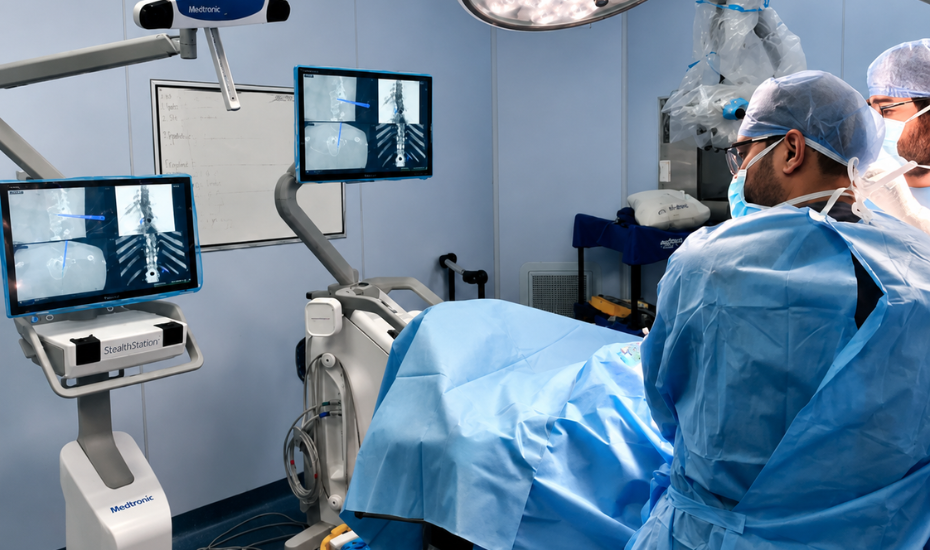
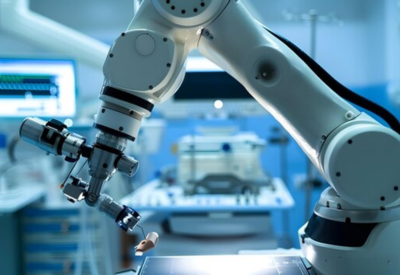
The Sanjay Gandhi Postgraduate Institute of Medical Sciences (SGPGI) in Lucknow has introduced the advanced O-arm imaging system to strengthen its capabilities in complex spine and neurosurgical procedures. The installation marks a major technological upgrade for the institute and positions SGPGI among a limited number of government medical institutions in India equipped with this high end surgical imaging technology.
The O-arm system is an advanced intraoperative imaging platform that provides real time 2D and 3D imaging during surgeries. Surgeons can now obtain highly accurate visual guidance while operating on spinal deformities, fractures, tumors, and minimally invasive spinal procedures. Experts say the technology significantly improves surgical precision, implant placement accuracy, and patient safety while reducing complications.
Healthcare specialists explained that traditional spine surgeries often rely on standard imaging methods that may not provide continuous high resolution visualization during procedures. The O-arm system works alongside computer assisted navigation technology, allowing surgeons to precisely track surgical instruments and spinal implants in real time. This is expected to improve outcomes in delicate spinal and neurosurgical operations.
The development is part of SGPGI’s larger expansion into advanced robotic and technology assisted healthcare services. Over the past year, the institute has expanded robotic surgery programmes, upgraded radiology systems, enhanced neuro-otology services, and increased investments in high end quaternary care infrastructure. Reports indicate that Uttar Pradesh has allocated significant funding for SGPGI’s modernization and advanced equipment acquisition.
Medical experts believe technologies like the O-arm system are especially important for minimally invasive surgeries because they reduce tissue damage, shorten recovery time, lower infection risks, and improve postoperative outcomes. The system is also expected to support training and research in advanced spinal surgery techniques at SGPGI.
The latest upgrade reflects the growing adoption of AI-assisted imaging, robotic surgery, and precision guided healthcare technologies across India’s major government medical institutions. Experts say advanced surgical imaging systems will play a critical role in the future of neurosurgery, orthopaedics, trauma care, and complex spinal treatment.
Some public discussions on social media continue to raise concerns regarding accessibility, patient load, administrative delays, and appointment availability at large public healthcare institutions like SGPGI. However, many patients and healthcare observers acknowledge the institute’s expanding role as one of North India’s leading centres for advanced and affordable tertiary healthcare.