India has achieved a landmark breakthrough in oncology with the launch of NexCAR19 (actalycabtagene autoleucel), the country’s first indigenously developed CAR-T cell therapy. This next-generation immunotherapy was created through a collaboration among IIT Bombay, Tata Memorial Centre and ImmunoACT, part of India’s drive to build local advanced-therapy capabilities.
CAR-T cell therapy involves harvesting a patient’s own T-cells, genetically engineering them to target specific cancer-cell antigens (in this case CD19), expanding them in the laboratory, then infusing them back into the patient to eliminate malignant cells. While this technology has been available in developed countries, costs often exceed US $400,000 per treatment. In contrast, NexCAR19 is priced at roughly US $50,000 (≈ ₹40 lakh) in India, making it far more accessible.
Clinical trials in India underpin the therapy’s approval: among evaluable patients in two early-phase studies (n≈53), more than two-thirds achieved an objective response and about half attained complete remission. Severe side-effects such as major neurologic events or cytokine-release syndrome were far less frequent than global peers.
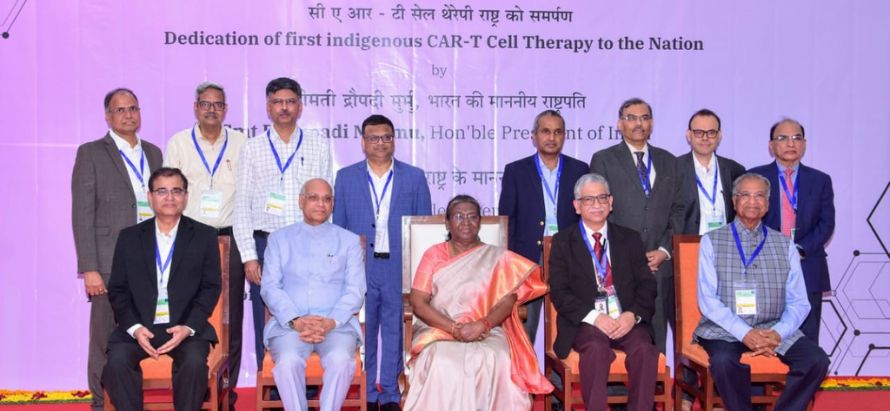
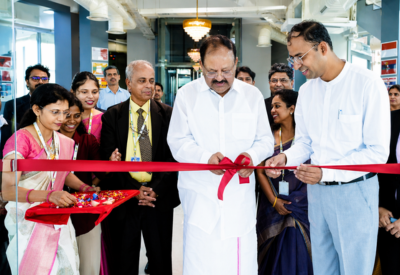
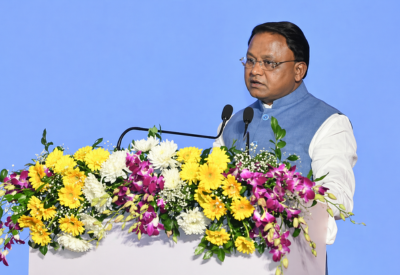
The launch event, attended by President Droupadi Murmu, emphasised the therapy’s alignment with national priorities under Make in India, affordable care and self-reliance in advanced biotherapeutics. The therapy will initially target patients with relapsed/refractory B-cell lymphomas and leukaemias and is expected to roll out in major cancer centres across India.
While development is laudable, experts caution that access, capacity-building, reimbursement and long-term follow-up remain critical to realising broad benefit. Manufacturing scale-up, training CAR-T teams in hospitals and ensuring safe delivery protocols will determine how widely this innovation reaches patients beyond metro centres.