Healthcare Leadership, Policy & Digital Health News IndiaHealthcare Leadership, Policy & Digital Health News IndiaHealthcare Leadership, Policy & Digital Health News India
  • Home
  • News
  • Articles
  • Exclusive
  • HB Originals
  • Gallery
  • Advertisement
  • Press Releases
Healthcare Leadership, Policy & Digital Health News IndiaHealthcare Leadership, Policy & Digital Health News India
  • Medical Science
Search
  • Home
  • News
  • Articles
  • Exclusive
  • HB Originals
  • Gallery
  • Advertisement
  • Press Releases
Follow US
  • Advertise
© 2025 Health Hub Media Pvt Ltd. All Rights Reserved.
Healthcare Leadership, Policy & Digital Health News India > Blog > Health Tech > Mount Sinai’s AI “InfEHR” Uncovers Hidden Clues to Rare Diseases Using EHR Data

Mount Sinai’s AI “InfEHR” Uncovers Hidden Clues to Rare Diseases Using EHR Data

Published: October 16, 2025
SHARE

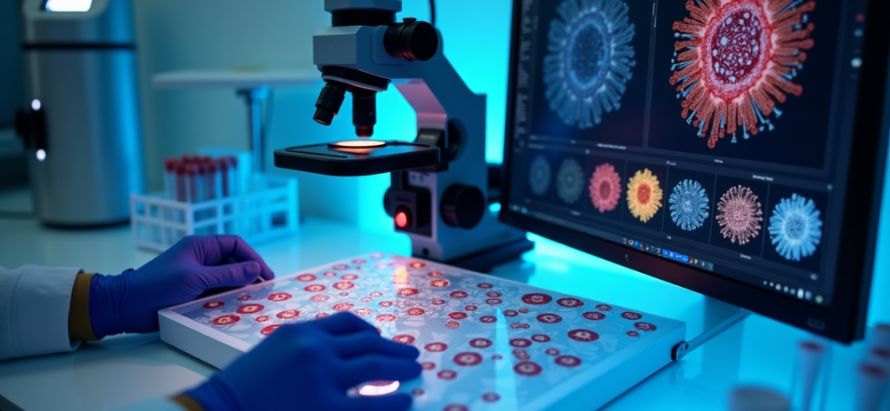
Mount Sinai researchers have developed InfEHR, an AI system that links scattered patient data to detect rare and unusual disease patterns it can flag conditions like neonatal sepsis or post-operative kidney injury more accurately and earlier than existing clinical methods.

Glimpse:

At the Icahn School of Medicine at Mount Sinai, scientists have introduced InfEHR, a novel AI platform designed to improve detection of rare and atypical diseases by piecing together otherwise disconnected medical events from electronic health records (EHRs). InfEHR excels especially in hard cases: for example, it identifies newborns with neonatal sepsis (even when blood cultures are negative) at dramatically higher rates, and flags risk of kidney injury after surgery more effectively than standard clinical criteria. Crucially, InfEHR is built to operate without large, disease-specific datasets and seems to generalize well across hospital populations. This approach could change how we find rare risks, shift diagnoses earlier, reduce misdiagnosis, and guide more personalized interventions.

Rare diseases are famously hard to catch. Many times, symptoms are subtle, test results inconclusive and clinicians are left balancing suspicion with uncertainty. But a new tool from Mount Sinai called InfER is making strides in tipping that balance in favor of earlier, more confident detection.

The core idea behind InfER is simple but powerful: most of our medical world is documented in electronic health records. But that data is often fragmented tests done here, symptoms noted there, follow-ups in another system. InfER connects those dots. It builds a “diagnostic web” that tracks medical events over time, looking for patterns that might suggest rare or under-recognized disease, even before full criteria are met.

In a recent study, researchers tested InfER on two tough problems: neonatal sepsis (which sometimes shows up even when usual tests, like blood cultures, are negative) and post-surgical kidney injury. The results were impressive for neonatal sepsis, InfER was 12-16 times more likely to identify affected infants than standard approaches; for kidney injury, the detection rate improved significantly (4-7 times). It also has a safety-first feature: when the data just doesn’t add up, it can indicate “not sure” rather than making a false positive call.

What makes this especially exciting is that InfER doesn’t require massive, rare disease-specific datasets to work well. Instead, it leans on routine lab results (things like blood counts, kidney function, indicators like cholesterol) and histories already present in patient records. That means it has potential to scale more easily, across hospitals, across populations, with less extra cost.

Of course, there are challenges. Differences in record-keeping across hospitals, missing or inconsistent data, issues of privacy and consent, and avoiding bias in how the AI is trained or validated are all real hurdles. And in rare disease detection false positives can be harmful, causing anxiety or unnecessary testing so calibration, clinical oversight, and transparency matter a lot.

Still, InfER looks like a major leap forward. For patients whose diagnoses are often delayed for months or years, tools like this can help shorten that wait. For clinicians, it can offer insight, backup, and a safety net in tricky diagnostic situations. And for health systems, earlier detection often means more effective treatment, fewer complications, and better outcomes.

“By linking the pieces of scattered lab results, symptoms, and medical history, we can now see disease risk in a whole new light even when traditional tests come back negative,”

By

HB Team

Related News

Nourish Raises $100 Million to Expand AI-Powered Metabolic Healthcare

May 22, 2026

A Commander’s Mission Beyond the Battlefield Serving the Humanity @ Amor Hospitals

May 20, 2026

Canadian Cruise Passenger Tests Positive in MV Hondius Hantavirus Outbreak

May 18, 2026

AI Set to Power India’s Next Healthcare Revolution Under PM-JAY and ABDM

May 13, 2026

IIT Patna Develops AI Wearable Device for Early Dementia Detection

May 12, 2026

HealthQuad Invests in LifeSigns to Scale AI-Based Remote Patient Monitoring Worldwide

May 12, 2026

How Digital Technology and AI Are Redefining Modern Nursing Care

May 12, 2026

India’s Medical Robotics Revolution Is Transforming Modern Healthcare

May 11, 2026

10 Health Tech Innovations Transforming Healthcare This National Technology Day

May 11, 2026

India Launches JANANI Platform to Digitize Maternal & Child Healthcare Tracking Nationwide

May 8, 2026

India Launches Swasth Bharat Portal to Create a Unified Digital Healthcare Ecosystem

May 7, 2026

Infosys Acquires Optimum Healthcare IT to Power AI-Driven Healthcare Transformation

May 6, 2026

MrMed Expands Bengaluru Hub to Power Faster Delivery of Critical Medicines

May 5, 2026

NIMHANS Launches App Repository to Simplify Mental Health Choices

May 4, 2026

Thermo Fisher’s $1.075 Billion Shake-Up: Microbiology Unit Sold to Astorg in Strategic Pivot

April 29, 2026

India’s Biggest Digital Health Survey Nears Release, Covering Over 6.7 Lakh Households

April 29, 2026

Gleneagles BGS Rolls Out ‘HEAL Health Card’ to Make Quality Healthcare More Affordable

April 29, 2026

Jharkhand Taps AI Power with Google Pact to Rebuild Digital Healthcare Backbone

April 29, 2026

Mumbai’s S.L. Raheja Hospital Elevates Care with Smart Diagnostics and Robo-Ortho Launch

April 29, 2026

India’s Digital Health Reality Check: Patients Say “Fix Trust First, Then Tech”

April 30, 2026
Gujarat Plans ₹13,000 Crore International Medicity Inspired by Dubai Healthcare City Near Kalol
Why Interoperability Is Important in Healthcare! The Foundation for Integrated, Patient-Centered Care
AI Impact Summit 2026 Day 1 Sets Strong Tone for Responsible AI in Health
Practo Appoints Srijesh Kumar as Global Chief Product & Technology Officer to Drive AI-Powered Growth
Counsel Health Extends Its AI Care Platform to Cover Lifestyle Diseases and Chronic Conditions
Your browser does not support the audio element.

Contact us

Privacy Policy

Terms & Conditions

HealthBuzz is a leading platform for healthcare news in India, covering hospital leadership updates, health policy developments, digital health innovations, and emerging healthcare startups. Stay informed with the latest insights shaping India’s healthcare ecosystem.

Facebook Twitter Youtube Whatsapp

Quick Links

  • Home
  • Articles
  • HB Originals
  • News
  • Videos
  • Gallery

Company

  • About us
  • Contact Us
  • Privacy Policy
  • Terms & Conditions

Install our Mobile App for Best Experience

Healthcare Leadership, Policy & Digital Health News IndiaHealthcare Leadership, Policy & Digital Health News India
Follow US
Health Hub Media Pvt. Ltd. © 2026 All Rights Reserved
Welcome Back!

Sign in to your account

Username or Email Address
Password

Lost your password?