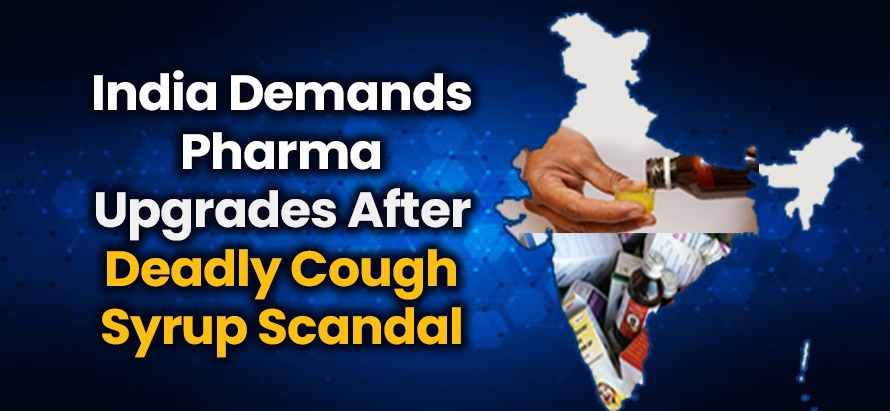
India’s health regulators have taken a firm stance in the ongoing cough syrup crisis: the requests by some pharmaceutical firms to delay upgrades to meet WHO Good Manufacturing Practices (GMP) have been denied. Officials insist that all manufacturing units must adhere to international safety standards by the deadline, with no further exceptions.
This action comes after lab tests exposed that the Coldrif syrup made by Sresan Pharma had DEG levels nearly 500 times above permissible limits. The plant has been sealed, licenses revoked, and the company’s founder has been arrested. The broader crackdown is intended to restore public trust and impose accountability across the pharmaceutical sector.
Smaller firms had argued that rapid upgrades would push them toward insolvency. However, regulators maintain that compliance must not be optional when lives are at stake. Enforcement is expected to tighten, with inspections, recalls, and legal action scaling up.