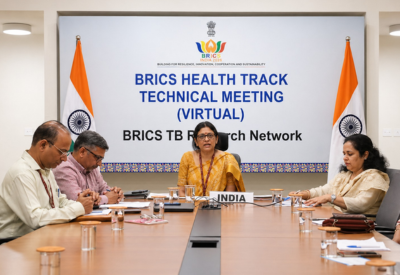
For decades, irritable bowel syndrome has been diagnosed and managed primarily based on symptom patterns under the Rome criteria, with treatments applied broadly across patients who share similar complaints but often show inconsistent responses. A major new study led by an international consortium, including key contributions from AIIMS New Delhi, Imperial College London, and Mayo Clinic, has used advanced artificial intelligence to reveal that IBS is far more biologically diverse than previously understood.
The research team applied unsupervised deep learning techniques specifically deep autoencoders followed by graph-based clustering to integrate multi-omics datasets (genomics, transcriptomics, metabolomics, gut microbiome composition) with detailed clinical phenotyping from 1,200+ IBS patients. The analysis consistently recovered four biologically distinct subtypes that do not align with conventional IBS-D, IBS-C, IBS-M, and IBS-U groupings.
The identified subtypes include:
An inflammatory-dominant group characterised by elevated faecal calprotectin, pro-inflammatory cytokine profiles, and mucosal immune activation
A microbiome-disrupted subtype with marked dysbiosis, reduced microbial diversity, and overgrowth of methane-producing archaea
A serotonin-mediated group showing altered enterochromaffin cell density and serotonin transporter expression
A mixed neuro-immune subtype with overlapping features of central sensitisation, low-grade neuroinflammation, and autonomic dysfunction
Each subtype demonstrated unique clinical trajectories and differential responses to existing therapies. Inflammatory-dominant patients showed better outcomes with low-dose anti-inflammatory agents, microbiome-disrupted cases responded strongly to rifaximin and targeted probiotics, and serotonin-mediated patients had higher response rates to 5-HT3 antagonists and neuromodulators.
Crucially, the AI model could predict subtype membership with 87–93% accuracy using only basic demographic data, symptom scores, and a small panel of blood and faecal biomarkers suggesting that a simple, scalable test could one day guide subtype classification in routine practice. This would represent a major shift from IBS as a diagnosis of exclusion to a spectrum of biologically defined disorders amenable to targeted interventions.
We’ve long suspected IBS is not one disease, but without tools to see the underlying biology, we’ve been forced to treat it symptomatically. AI has now given us that visibility revealing distinct pathways that explain why patients respond so differently to the same treatments.
The findings have immediate implications for clinical trials, drug development, and patient care. Enrolling patients based on biological subtype rather than symptom clusters could dramatically increase response rates in IBS studies and accelerate approval of more effective therapies. Clinicians may soon be able to move beyond trial-and-error prescribing toward subtype-guided management.
The research team is now launching prospective validation studies across multiple Indian centres to confirm the subtypes and test subtype-specific treatment algorithms. If successful, this work could lead to revised diagnostic criteria, new biomarkers, and a fundamental reclassification of functional gastrointestinal disorders offering renewed hope for millions affected by IBS worldwide.