Singapore’s Tan Tock Seng Hospital (TTSH) is set to trial an AI-powered brain computer interface that enables paralysed patients to communicate using eye blinks and brain signals.
Glimpse:
Announced in April 2026, TTSH will conduct an 18-month clinical trial of an AI-driven neural interface developed by startup Neural Drive. The device uses electrodes to detect eye blinks and brain activity, allowing patients to communicate, control devices, and perform daily tasks via connected systems like tablets and laptops. Around 30 patients are expected to participate.
In a major step toward assistive healthcare innovation, Singapore’s Tan Tock Seng Hospital (TTSH) is set to trial an artificial intelligence powered brain computer interface designed to help paralysed patients communicate using eye blinks and focused thought.
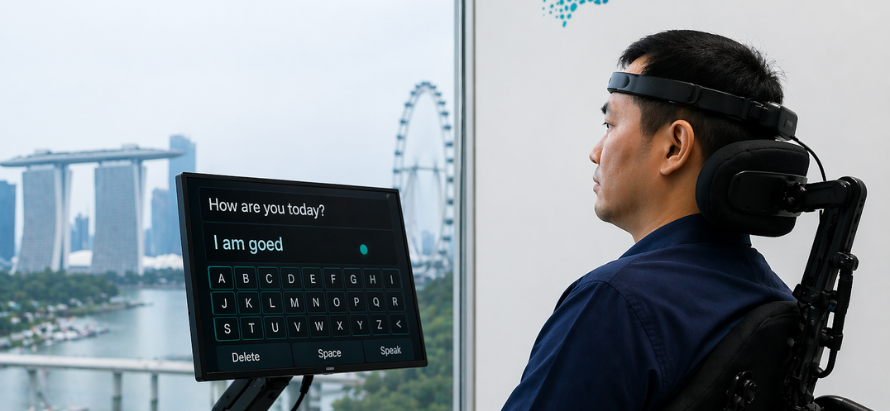
The system works by placing electrodes behind the ears and above one eye to capture brainwaves and blinking patterns. These signals are processed by AI to interpret user intent, allowing patients to navigate a digital interface and select actions such as sending messages, requesting assistance, or controlling devices like lights and television.
Users can scroll through options by blinking twice and confirm selections by focusing their attention for a few seconds. The device connects to external devices such as laptops and tablets, enabling communication through pre-set messages and applications like WhatsApp or YouTube.
One of the key advantages of the technology is its affordability and non-invasive design. Unlike traditional eye-tracking systems that can cost up to $15,000 or brain implants requiring surgery, the Neural Drive device is priced at around $2,500 and does not require invasive procedures.
Early home trials involving around 60 users have shown promising results, demonstrating improved communication and reduced caregiver burden. The hospital plans to integrate the technology into speech therapy and rehabilitation programs if the clinical trial proves successful.
Experts believe this innovation could significantly improve quality of life by restoring a basic human ability the ability to communicate especially for patients who are fully conscious but unable to speak or move.
The initiative highlights the growing role of AI-powered assistive technologies in healthcare, where non-invasive, affordable solutions are increasingly being developed to enhance patient independence and dignity.