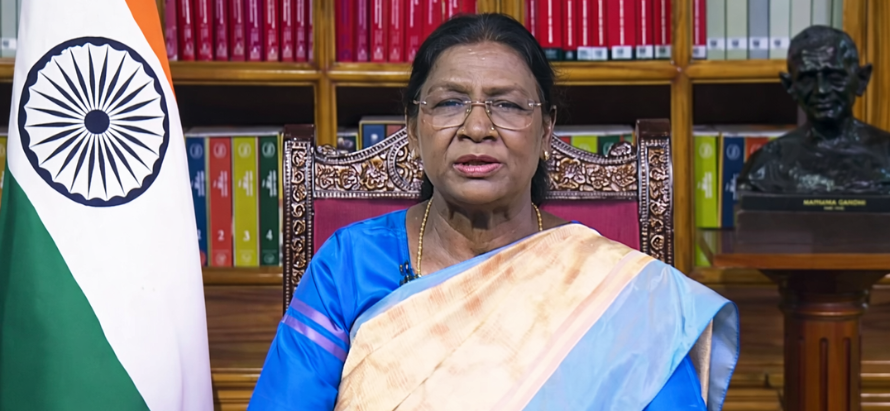
President Droupadi Murmu addressed the first convocation of AIIMS Rajkot on April 13, 2026, emphasizing how artificial intelligence, robotics, and digital health services are rapidly transforming the medical field while underscoring that human empathy and compassion remain essential in patient care.
Glimpse:
Speaking at the inaugural convocation ceremony of AIIMS Rajkot in Gujarat, President Murmu urged graduating medical professionals to embrace new technologies to enhance their knowledge, skills, and treatment outcomes. She noted that while AI, robotics, precision medicine, and digital health are reshaping healthcare, no technological tool can replace the healing power of gentle words, a reassuring smile, and attentive listening. She also called on the institute to prioritize local health challenges such as maternal and child health and sickle cell anaemia, especially in rural and tribal areas.
President Droupadi Murmu has observed that the medical landscape is evolving at an unprecedented pace due to advancements in artificial intelligence, robotics, and digital health services. Addressing the first convocation ceremony of the All India Institute of Medical Sciences (AIIMS) Rajkot on April 13, 2026, she encouraged young doctors and healthcare professionals to actively adopt these emerging technologies to strengthen their expertise and improve patient treatment results.
The President highlighted that these innovations have significantly altered the face of modern medicine, offering new possibilities for diagnosis, treatment, and care delivery. However, she firmly reminded the audience that technology alone is not enough. Human empathy and sensitivity continue to play a vital role in healing. She remarked that a doctor’s gentle words, reassuring smile, and willingness to listen to a patient’s concerns can often prove more effective than medication alone. She described medicine not merely as a profession but as a profound commitment to serving humanity.
President Murmu advised AIIMS Rajkot a relatively new institution to develop a clear roadmap focused on good governance, transparency, and optimal use of resources. She urged the institute to prioritize research and services addressing local health issues, particularly maternal and child health as well as genetic disorders like sickle cell anaemia prevalent in rural and tribal regions of Gujarat. The goal, she said, should be to deliver accessible, high quality, and affordable tertiary care to the community.
She also acknowledged the broader contributions of AIIMS institutions across India in advancing medical education, patient care, research, and policy development. At AIIMS Rajkot, she noted ongoing progress in medical services, telemedicine, and community outreach programmes. Turning to the graduating students, the President reminded them of their responsibility as custodians of public health and the immense trust society places in doctors.
The event underscored the need to strike a balance between technological innovation and compassionate care as India continues to strengthen its healthcare system.