Healthcare Leadership, Policy & Digital Health News IndiaHealthcare Leadership, Policy & Digital Health News IndiaHealthcare Leadership, Policy & Digital Health News India
  • Home
  • News
  • Articles
  • Exclusive
  • HB Originals
  • Gallery
  • Advertisement
  • Press Releases
Healthcare Leadership, Policy & Digital Health News IndiaHealthcare Leadership, Policy & Digital Health News India
  • Medical Science
Search
  • Home
  • News
  • Articles
  • Exclusive
  • HB Originals
  • Gallery
  • Advertisement
  • Press Releases
Follow US
  • Advertise
© 2025 Health Hub Media Pvt Ltd. All Rights Reserved.
Healthcare Leadership, Policy & Digital Health News India > Blog > Frontline Focus > Can AI-Generated Clinical Notes Cut Doctor Burnout? New Study Says Yes With Caution

Can AI-Generated Clinical Notes Cut Doctor Burnout? New Study Says Yes With Caution

Published: December 1, 2025
SHARE

Generative and ambient-AI tools that produce clinical notes from doctor patient conversations could drastically reduce the documentation burden on physicians, reclaiming hours spent on paperwork and allowing doctors to focus on patients. Early evidence shows significant drops in after-hours charting and physician burnout.

Glimpse:

Clinical documentation has become a major driver of physician burnout worldwide  in many settings, doctors spend more time on electronic medical records (EMRs) than interacting with patients.  AI-powered “scribes” or note-generation tools listen to consultations (with consent), auto-transcribe medical speech, and draft structured notes (e.g. SOAP format), ready for review by the physician. Early trials report that doctors using such tools see reductions in documentation time, fewer hours spent after clinics, improved well-being, and more time for direct patient care.

Clinical documentation has long been a silent drain on physicians’ time and energy. Many doctors globally report spending hours after work finishing visit notes, discharge summaries, and compliance paperwork  often cutting into personal time and contributing to burnout. 

To address this, health systems are increasingly piloting ambient and generative-AI “scribe” tools. These systems function like a digital assistant in the consultation room: with patient consent, a microphone (or integrated device) records the conversation; a speech-recognition engine converts it to text (while handling medical vocabulary and accents); then a large language model (LLM) restructures the content into a formal clinical note  extracting relevant information like patient symptoms, history, medications, doctor’s assessment and plan  rather than producing a full verbatim transcript. This saves massive time for physicians while preserving essential clinical detail. 

Real-world results are promising but nuanced. A recent randomized trial involving two AI-scribe tools reported that one tool reduced documentation time per note by nearly 10%, along with modest improvements in physician burnout and cognitive load. Other studies have shown large absolute reductions (over 20 points) in burnout prevalence and improvements in documentation-related well-being in clinicians using ambient-AI scribes. Doctors using AI scribes often report feeling more present with patients (less screen time), improved work-life balance, and greater satisfaction.  without challenges and limitations. AI-generated notes are not immune to errors  “hallucinations” or plausible but incorrect/invented content remain a risk, which can be dangerous in clinical documentation.  Ambient scribes may miss contextual data not spoken aloud during consultation (previous history, outside lab reports, imaging results) unless manually incorporated, potentially leaving gaps.  Regulatory and medico-legal frameworks are still evolving in many countries; human oversight remains essential. Many experts emphasise that AI can assist  not replace  clinicians, underscoring the need for review and responsibility retention by the physician. 

Economically, AI documentation tools may reduce overtime costs, mitigate burnout-related turnover, and improve productivity. But implementation costs, training, integration with existing EMR/HIS systems, data privacy, infrastructure, and scalability remain significant barriers especially in resource-constrained or smaller clinics.

“With ambient AI scribes, doctors are reclaiming their evenings and their connection with patients.”

By

HB Team

Related News

Nourish Raises $100 Million to Expand AI-Powered Metabolic Healthcare

May 22, 2026

A Commander’s Mission Beyond the Battlefield Serving the Humanity @ Amor Hospitals

May 20, 2026

Canadian Cruise Passenger Tests Positive in MV Hondius Hantavirus Outbreak

May 18, 2026

AI Set to Power India’s Next Healthcare Revolution Under PM-JAY and ABDM

May 13, 2026

IIT Patna Develops AI Wearable Device for Early Dementia Detection

May 12, 2026

HealthQuad Invests in LifeSigns to Scale AI-Based Remote Patient Monitoring Worldwide

May 12, 2026

How Digital Technology and AI Are Redefining Modern Nursing Care

May 12, 2026

India’s Medical Robotics Revolution Is Transforming Modern Healthcare

May 11, 2026

10 Health Tech Innovations Transforming Healthcare This National Technology Day

May 11, 2026

India Launches JANANI Platform to Digitize Maternal & Child Healthcare Tracking Nationwide

May 8, 2026

India Launches Swasth Bharat Portal to Create a Unified Digital Healthcare Ecosystem

May 7, 2026

Infosys Acquires Optimum Healthcare IT to Power AI-Driven Healthcare Transformation

May 6, 2026

MrMed Expands Bengaluru Hub to Power Faster Delivery of Critical Medicines

May 5, 2026

NIMHANS Launches App Repository to Simplify Mental Health Choices

May 4, 2026

Thermo Fisher’s $1.075 Billion Shake-Up: Microbiology Unit Sold to Astorg in Strategic Pivot

April 29, 2026

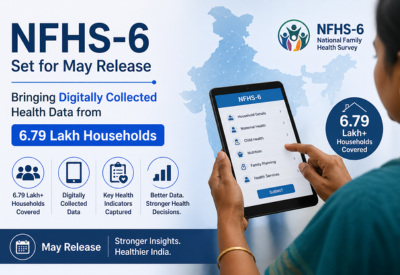
India’s Biggest Digital Health Survey Nears Release, Covering Over 6.7 Lakh Households

April 29, 2026

Gleneagles BGS Rolls Out ‘HEAL Health Card’ to Make Quality Healthcare More Affordable

April 29, 2026

Jharkhand Taps AI Power with Google Pact to Rebuild Digital Healthcare Backbone

April 29, 2026

Mumbai’s S.L. Raheja Hospital Elevates Care with Smart Diagnostics and Robo-Ortho Launch

April 29, 2026

India’s Digital Health Reality Check: Patients Say “Fix Trust First, Then Tech”

April 30, 2026
Narayana Health City Executes Country’s First Robotic-Assisted VSD Closure in Children
Symplr Rolls Out AI-Driven Tools to Optimize Healthcare Operations at ViVE 2026
TrumpRx Expands Dramatically Nine Pharma Giants Join to Slash Drug Prices for Americans
India & Switzerland Forge Stronger Ties New Collaboration to Power Biotech and Pharma Innovation
Mantram Surgical Robot Yatra Reaches Lucknow, Bringing Advanced Robotic Surgery Closer to Patients
Your browser does not support the audio element.

Contact us

Privacy Policy

Terms & Conditions

HealthBuzz is a leading platform for healthcare news in India, covering hospital leadership updates, health policy developments, digital health innovations, and emerging healthcare startups. Stay informed with the latest insights shaping India’s healthcare ecosystem.

Facebook Twitter Youtube Whatsapp

Quick Links

  • Home
  • Articles
  • HB Originals
  • News
  • Videos
  • Gallery

Company

  • About us
  • Contact Us
  • Privacy Policy
  • Terms & Conditions

Install our Mobile App for Best Experience

Healthcare Leadership, Policy & Digital Health News IndiaHealthcare Leadership, Policy & Digital Health News India
Follow US
Health Hub Media Pvt. Ltd. © 2026 All Rights Reserved
Welcome Back!

Sign in to your account

Username or Email Address
Password

Lost your password?