Healthcare Leadership, Policy & Digital Health News IndiaHealthcare Leadership, Policy & Digital Health News IndiaHealthcare Leadership, Policy & Digital Health News India
  • Home
  • News
  • Articles
  • Exclusive
  • HB Originals
  • Gallery
  • Advertisement
  • Press Releases
Healthcare Leadership, Policy & Digital Health News IndiaHealthcare Leadership, Policy & Digital Health News India
  • Medical Science
Search
  • Home
  • News
  • Articles
  • Exclusive
  • HB Originals
  • Gallery
  • Advertisement
  • Press Releases
Follow US
  • Advertise
© 2025 Health Hub Media Pvt Ltd. All Rights Reserved.
Healthcare Leadership, Policy & Digital Health News India > Blog > Health Tech > Ten Thousand Images, Five Days! How AI Is Turning the Odds in IVF’s Favor

Ten Thousand Images, Five Days! How AI Is Turning the Odds in IVF’s Favor

Published: October 13, 2025
SHARE

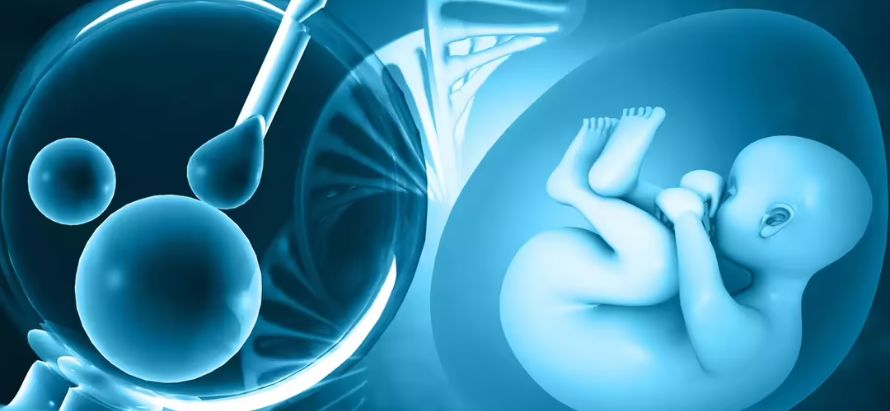
AI is transforming IVF by using thousands of embryo images over narrow time windows to predict which embryos are most likely to result in successful pregnancy, reducing subjectivity in selection, improving success rates, and saving time, money, and emotional investment for hopeful parents.

Glimpse:

Recent research and applications of artificial intelligence in IVF are giving badly needed boosts to success rates. AI models trained on tens of thousands of embryo images even those taken at specific stages for example, 110 hours post-fertilization can classify embryo quality with far greater consistency than human observers. These systems analyze morphological features, growth timing, and developmental changes to predict implantation potential. Meta-analyses show AI tools achieving sensitivity and specificity in the 60-70% range, which, while not perfect, is a significant improvement over purely visual or manual grading methods. Clinics using AI-assisted embryo selection, follicle monitoring, and treatment personalization are reporting fewer failed cycles and more confidence in which embryos to transfer.

In the world of IVF, picking the right embryo can feel a little like rolling dice hoping that the one chosen will stick, develop, and lead to a pregnancy. What if the odds could be shifted more deliberately, using AI trained on thousands of embryo photos.

That’s what a growing number of studies are showing. AI models trained on large datasets of embryo images captured at precise timepoint are enabling embryologists to “see” things that are hard to detect with naked eyes. Features like cell symmetry, patterns of division, subtle morphological changes, and kinetics of growth become inputs into algorithms that try to predict which embryos are most likely to implant successfully.

For example, an algorithm called Stork was trained on over 12,000 embryo images, all taken at a fixed time after fertilization, to distinguish “good quality” vs “poor quality” embryos. It reported very high accuracy in classifying embryos. In one study, embryos with >58% chance of progressing were considered good <35%, poor. The AI achieved classification accuracy close to 97% for those categories. From studies of similar nature.

Optimizing when to trigger final maturation of eggs by recognizing the optimal follicle sizes not just the largest follicles. A large multi-clinic dataset (19,000+ cycles) showed that follicles in the 13-18 mm range on trigger day correlate better with retrieval of mature eggs and live birth rates.

Integrating patient history, hormone levels, and clinical context with image data to better predict outcomes, avoiding cycles that are unlikely to succeed, and customizing stimulation protocols.

Reducing subjectivity: manual grading is influenced by expert bias, fatigue, and image quality. AI, once trained well, offers consistency, repeatability, and can “learn” subtle signals that humans often miss.

Of course, there are caveats: AI models must be trained on representative datasets diverse patient ages, varying lab settings. Image quality, ethical regulation, and ensuring transparency so doctors and patients understand “why” an embryo is scored a certain way are all critical. Plus, these tools are not magic they augment, not replace, the skill of embryologists.

Still, for many couples, this kind of technology represents hope: fewer failed cycles, fewer emotional and financial burdens, and a reduced waiting game. If IVF clinics in India and globally scale up quality AI-assisted tools, this could be a tipping point in fertility care.

“When you look at hundreds of embryos, many seem indistinguishable but AI sees patterns over time, learns from thousands, and helps us pick with greater confidence. It doesn’t take away hope; it sharpens it.”

By

HB Team

Related News

Nourish Raises $100 Million to Expand AI-Powered Metabolic Healthcare

May 22, 2026

A Commander’s Mission Beyond the Battlefield Serving the Humanity @ Amor Hospitals

May 20, 2026

Canadian Cruise Passenger Tests Positive in MV Hondius Hantavirus Outbreak

May 18, 2026

AI Set to Power India’s Next Healthcare Revolution Under PM-JAY and ABDM

May 13, 2026

IIT Patna Develops AI Wearable Device for Early Dementia Detection

May 12, 2026

HealthQuad Invests in LifeSigns to Scale AI-Based Remote Patient Monitoring Worldwide

May 12, 2026

How Digital Technology and AI Are Redefining Modern Nursing Care

May 12, 2026

India’s Medical Robotics Revolution Is Transforming Modern Healthcare

May 11, 2026

10 Health Tech Innovations Transforming Healthcare This National Technology Day

May 11, 2026

India Launches JANANI Platform to Digitize Maternal & Child Healthcare Tracking Nationwide

May 8, 2026

India Launches Swasth Bharat Portal to Create a Unified Digital Healthcare Ecosystem

May 7, 2026

Infosys Acquires Optimum Healthcare IT to Power AI-Driven Healthcare Transformation

May 6, 2026

MrMed Expands Bengaluru Hub to Power Faster Delivery of Critical Medicines

May 5, 2026

NIMHANS Launches App Repository to Simplify Mental Health Choices

May 4, 2026

Thermo Fisher’s $1.075 Billion Shake-Up: Microbiology Unit Sold to Astorg in Strategic Pivot

April 29, 2026

India’s Biggest Digital Health Survey Nears Release, Covering Over 6.7 Lakh Households

April 29, 2026

Gleneagles BGS Rolls Out ‘HEAL Health Card’ to Make Quality Healthcare More Affordable

April 29, 2026

Jharkhand Taps AI Power with Google Pact to Rebuild Digital Healthcare Backbone

April 29, 2026

Mumbai’s S.L. Raheja Hospital Elevates Care with Smart Diagnostics and Robo-Ortho Launch

April 29, 2026

India’s Digital Health Reality Check: Patients Say “Fix Trust First, Then Tech”

April 30, 2026
Alkem Medtech Acquires 55% Stake in Occlutech for €99.4 Mn in Major Global Push
Telangana to Expand Health ATMs Across High-Footfall Hospitals After Successful Pilot Delivers Faster Diagnostics
ASTP/ONC Pushes HTI-1 Deadline to February 2026 After Shutdown Disruptions Relief for Health-IT Developers
Bristol Myers Squibb Partners with Microsoft to Advance AI-Powered Lung Cancer Detection
ObvioGo Integrates with Oracle Clinical One for Seamless Data Collection in Trials
Your browser does not support the audio element.

Contact us

Privacy Policy

Terms & Conditions

HealthBuzz is a leading platform for healthcare news in India, covering hospital leadership updates, health policy developments, digital health innovations, and emerging healthcare startups. Stay informed with the latest insights shaping India’s healthcare ecosystem.

Facebook Twitter Youtube Whatsapp

Quick Links

  • Home
  • Articles
  • HB Originals
  • News
  • Videos
  • Gallery

Company

  • About us
  • Contact Us
  • Privacy Policy
  • Terms & Conditions

Install our Mobile App for Best Experience

Healthcare Leadership, Policy & Digital Health News IndiaHealthcare Leadership, Policy & Digital Health News India
Follow US
Health Hub Media Pvt. Ltd. © 2026 All Rights Reserved
Welcome Back!

Sign in to your account

Username or Email Address
Password

Lost your password?