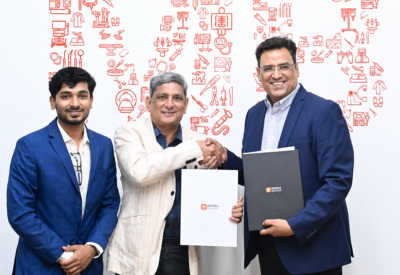
Max Healthcare Institute, India’s second-largest private hospital chain, has signed a comprehensive Memorandum of Understanding with Intuitive Surgical, the maker of the da Vinci surgical robotic system, to deepen collaboration and accelerate the adoption of robotic-assisted minimally invasive surgery across its 22-hospital network. The MoU, formalised on January 15, 2026, builds on Max’s existing status as one of India’s highest-volume robotic surgery centres and Intuitive’s long-standing presence in the Indian market.
Under the agreement, Max will serve as a flagship training and excellence hub for Intuitive’s robotic systems, expanding structured surgeon training programs, proctoring sessions, and fellowship opportunities for both Indian and international surgeons. The partnership will also facilitate joint clinical research to generate India-specific outcome data across key specialties urology (prostatectomy, partial nephrectomy), gynaecology (hysterectomy, endometriosis), surgical oncology (colorectal, thoracic, head & neck), and general surgery.
Both organisations will collaborate on awareness and patient education campaigns to highlight the benefits of robotic surgery smaller incisions, reduced blood loss, shorter hospital stays, faster recovery, and lower complication rates particularly in complex procedures where traditional open or laparoscopic approaches can be challenging.
Abhay Soi, Chairman & Managing Director of Max Healthcare, commented: “Robotic-assisted surgery has already transformed outcomes for thousands of our patients. This deepened partnership with Intuitive Surgical will allow us to scale this technology faster, train more surgeons, generate robust India-specific evidence, and make robotic surgery accessible to a much larger population.”
A representative from Intuitive Surgical added: “India represents one of the fastest-growing markets for robotic-assisted surgery globally. Collaborating with a leader like Max Healthcare enables us to build sustainable training ecosystems, drive clinical adoption, and ultimately improve patient care across diverse geographies.”
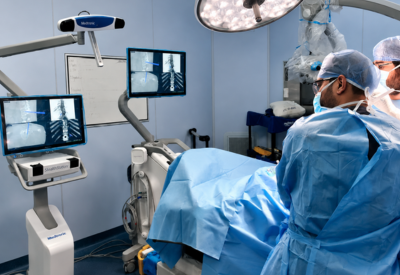
Max currently operates one of the largest robotic surgery programmes in the country, with multiple da Vinci Xi and SP systems across Delhi-NCR, Mohali, Dehradun, and other key locations. The MoU is expected to accelerate the deployment of additional systems in upcoming Max hospitals and strengthen the company’s leadership in high-complexity minimally invasive surgery.
The collaboration comes at a time when robotic surgery adoption in India is accelerating rapidly driven by improving insurance coverage, growing surgeon proficiency, and increasing patient demand for advanced, less invasive options. With this partnership, Max and Intuitive aim to set new benchmarks for quality, training, and patient access in robotic-assisted surgery across the country.