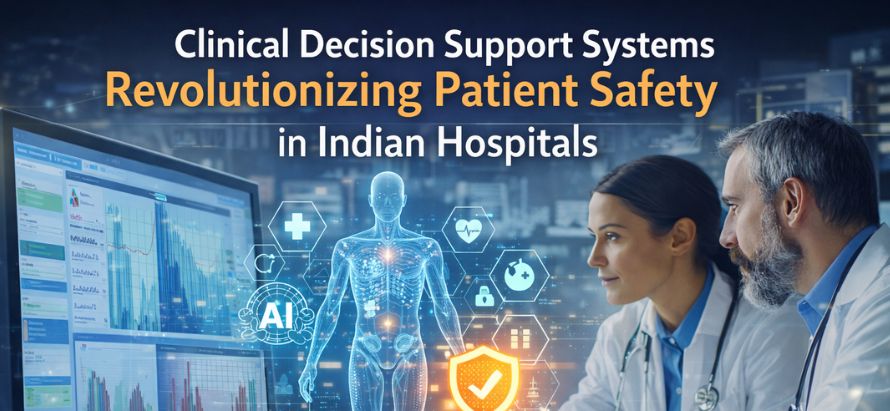
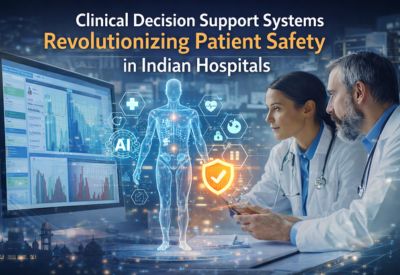
Clinical Decision Support Systems (CDSS) are gaining strong momentum in Indian hospitals as healthcare providers seek technology-driven ways to minimize errors and standardize care. These intelligent tools embedded within electronic health records (EHRs), computerized physician order entry (CPOE), and hospital information systems deliver context-specific knowledge and alerts directly to clinicians during decision-making moments.
Common CDSS functionalities deployed in India include: Medication safety alerts flagging drug–drug interactions, allergies, duplicate therapy, and inappropriate dosing Diagnostic support suggesting differential diagnoses based on symptoms, lab results, and imaging findings Evidence-based reminders prompting adherence to clinical guidelines (e.g., sepsis bundles, stroke protocols, VTE prophylaxis) Early warning scores real-time calculation of deterioration risk (MEWS, NEWS, qSOFA) with escalation alerts Order sets & pathways pre-configured, best-practice order bundles for common conditions
Early adopters large private chains (Apollo, Fortis, Max, Manipal), corporate hospitals, and select government medical colleges report measurable gains: 30–55% reduction in preventable adverse drug events Improved compliance with infection control and antimicrobial stewardship protocols Faster recognition and management of deteriorating patients Decreased unnecessary testing and length of stay in certain high-volume departments
Several Indian-developed and globally adapted CDSS platforms are now widely used: cloud-based solutions integrated with ABDM standards, AI-enhanced radiology and pathology support tools, and sepsis prediction models trained on Indian patient data. The government’s Ayushman Bharat Digital Mission (ABDM) is further accelerating adoption by promoting interoperability and secure data exchange, making it easier to embed CDSS across diverse hospital systems.
Challenges remain alert fatigue, integration complexity, clinician acceptance, and the need for India-specific training datasets but momentum is strong. Hospitals that invest in thoughtful CDSS implementation are seeing not only safer care but also better documentation, reduced litigation risk, and enhanced reputation for quality.
Experts believe CDSS will become a standard layer of care in Indian hospitals over the next 5–7 years, playing a critical role in achieving safer, more equitable healthcare nationwide.