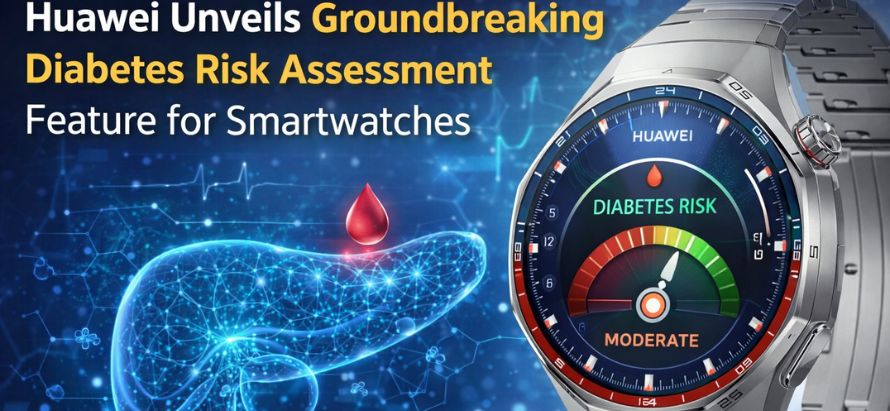
Huawei has introduced a new diabetes risk assessment feature on its latest smartwatches, enabling users to evaluate their risk of developing type 2 diabetes through continuous health data analysis. The non-invasive tool leverages heart rate variability, sleep patterns, activity levels, and other physiological signals to generate personalized risk scores and lifestyle recommendations, marking a significant step in preventive diabetes management using consumer wearables.
Glimpse:
The diabetes risk assessment feature, now available on select Huawei smartwatches including the Watch GT series, uses AI algorithms to analyze long-term data from built-in sensors (heart rate, SpO2, sleep tracking, exercise metrics) and delivers a daily/weekly risk score along with actionable insights to reduce risk factors such as poor sleep, sedentary behavior, and irregular heart rhythms. The feature has been validated through clinical partnerships and is designed to encourage early lifestyle changes, with alerts prompting users to consult physicians for formal screening. It is currently rolling out in India and other key markets with multilingual support.
Huawei has officially launched its diabetes risk assessment feature for smartwatches, making it one of the first major wearable brands to offer proactive, non-invasive screening for type 2 diabetes risk directly on consumer devices. The feature was unveiled during a global product event and is now rolling out to users in India, China, Europe, and Southeast Asia through an OTA update on compatible Huawei Watch models, including the Watch GT 4, GT 5, and Ultimate series.
The technology works by continuously collecting and analyzing physiological data captured by the watch’s sensors including heart rate variability (HRV), resting heart rate trends, blood oxygen saturation patterns, sleep quality metrics, stress levels, and activity/exercise data. Huawei’s proprietary AI algorithms, trained on large-scale anonymized health datasets and validated in collaboration with clinical research institutions, process these signals to calculate a personalized diabetes risk score. The score is presented daily or weekly in the Huawei Health app, accompanied by clear visual indicators (low/moderate/high risk) and tailored lifestyle recommendations such as increasing daily steps, improving sleep hygiene, managing stress, or adjusting dietary habits to lower risk factors.
Huawei collaborated with endocrinologists and public health experts to ensure the feature aligns with established diabetes risk assessment frameworks while adapting to diverse populations, including those in India where type 2 diabetes prevalence is among the highest globally. The model accounts for regional factors such as dietary patterns, physical activity norms, and genetic predispositions common in South Asian users. Importantly, Huawei emphasized that the feature is intended for wellness and awareness purposes only not as a medical diagnosis and includes prominent disclaimers urging users with elevated risk scores to seek professional medical screening (e.g., HbA1c or fasting glucose tests).
The launch has been positioned as part of Huawei’s broader “Health at Your Wrist” strategy, which already includes features like arrhythmia detection, SpO2 monitoring, sleep apnea screening, and emotional wellbeing tracking. Early user feedback from initial rollout markets highlights the feature’s ease of use, motivational impact on lifestyle changes, and seamless integration with the Huawei Health app’s goal-setting and progress-tracking tools. The company has also committed to ongoing model improvements through federated learning (with user consent) to enhance accuracy across different ethnicities, age groups, and lifestyles.
Industry observers see this as a pivotal moment for consumer wearables in preventive healthcare, especially in countries like India where diabetes affects over 100 million adults and early detection remains a major challenge. Huawei plans to expand the feature’s capabilities in future updates, potentially adding integration with continuous glucose monitoring partnerships and deeper risk trend analysis over months and years.