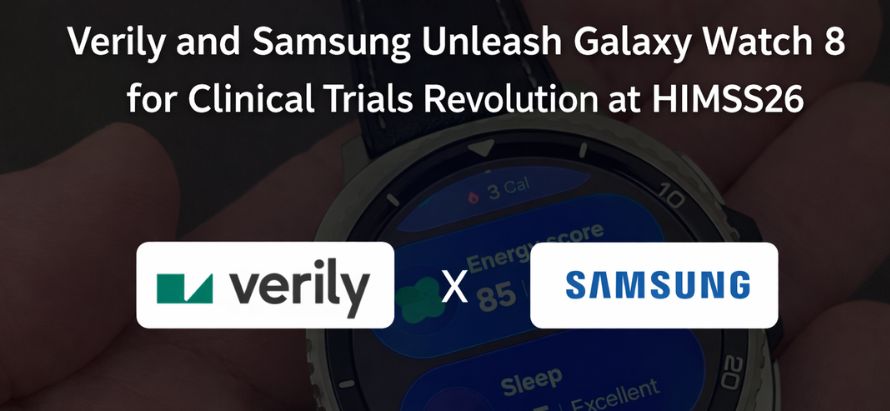
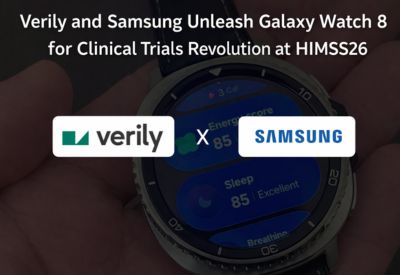
Verily Life Sciences and Samsung Electronics America announced a landmark partnership at HIMSS26, integrating the Galaxy Watch 8’s FDA-cleared sensors into Verily’s Pre precision health platform to enable seamless real-world data collection for clinical trials and population monitoring.
Glimpse:
This bundled solution streams continuous biometric data like sleep apnea detection, AFib notifications, SpO2, and body composition directly into Verily’s AI-powered Viewpoint Evidence system, empowering pharma sponsors with harmonized datasets via Refinery and advanced modeling through Workbench for faster, scalable research
At the HIMSS26 conference in Las Vegas, Verily an Alphabet subsidiary focused on precision health and Samsung unveiled their collaboration to fuse consumer-grade wearables with enterprise-grade analytics. The Galaxy Watch 8, boasting FDA clearances for moderate-to-severe obstructive sleep apnea (OSA) assessments and irregular heart rhythm notifications, now feeds live data streams into Verily’s Pre platform. This end-to-end system allows life sciences companies and government agencies to deploy watches to trial participants remotely, track compliance in real-time, and generate high-fidelity evidence from everyday activities. Unlike fragmented legacy setups, the integration eliminates data silos, turning billions of wrist-based readings into actionable insights for conditions like Parkinson’s, cardiovascular risks, and sleep disorders, where continuous monitoring trumps sporadic clinic visits.
Core highlight: Galaxy Watch 8’s validated sensors for heart rate, blood oxygen, body composition, and AI-driven OSA/AFib detection provide clinical-grade reliability, while Verily’s Viewpoint Evidence ingests raw streams for Refinery harmonization and Workbench AI/ML modeling. Sponsors gain tools to configure studies, monitor data quality, and link wearables to electronic health records at the individual level, supporting adaptive trial designs. This addresses longstanding barriers in real-world evidence (RWE) generation, where consumer devices historically produced “messy” data unfit for regulatory scrutiny. Early applications target remote patient monitoring, enabling nuanced treatment effect analysis without invasive equipment, potentially slashing trial costs by 20-30% through scalable, participant-friendly tech.
The partnership builds on Verily’s decade of digital measure validation, including peer-reviewed Parkinson’s algorithms that set benchmarks in accuracy. Samsung’s hardware evolution from step counters to regulated medical tools pairs perfectly with Verily’s backend, creating a turnkey solution for pharma giants seeking RWE on drug efficacy in diverse populations. For government health initiatives, it facilitates broad surveillance, like tracking sleep trends in shift workers or arrhythmia risks in aging demographics. Experts note this as a pivotal shift: wearables evolve from wellness gadgets to core research infrastructure, with encrypted data flows ensuring HIPAA compliance and privacy.
Looking ahead, the duo envisions expanded therapeutic areas, from neurology to cardiology, with multi-device ecosystems and global rollouts. At HIMSS26, demos showcased real-time dashboards blending watch data with lab results, hinting at precision health’s next era where everyday devices power breakthroughs. As adoption grows, this could redefine clinical endpoints, accelerate approvals, and democratize research beyond elite centers.
Competitors like Apple and Fitbit watch closely, but Verily-Samsung’s focus on pharma-grade integration sets a new standard. Challenges remain in data standardization across vendors, yet the bundled model mitigates this. With HIMSS buzz signaling strong demand, expect rapid pilots in 2026 trials.