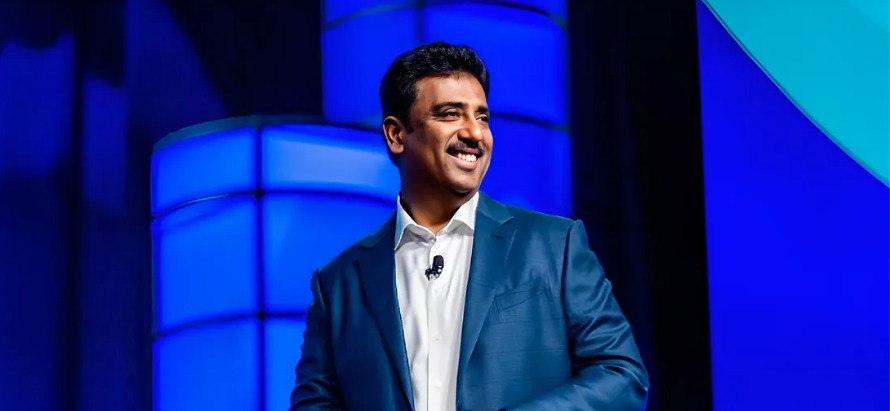
eClinicalWorks CEO Girish Kumar Navani has emphasised that healthcare AI must scale responsibly, with reliability and patient safety remaining non-negotiable priorities. In a detailed interview, Navani outlined the company’s approach to building trusted AI systems that augment clinical workflows while maintaining rigorous validation, transparency, and human oversight.
Glimpse:
Speaking at a healthcare technology forum on January 23, 2026, Navani stressed that AI in clinical settings cannot follow the “move fast and break things” philosophy common in consumer tech. Instead, eClinicalWorks focuses on extensive real-world testing, continuous monitoring for bias and drift, explainable outputs, and seamless integration with existing EHR workflows. The company’s AI suite including ambient documentation, predictive analytics, and clinical decision support is designed to reduce physician burnout while enhancing care quality and safety.
eClinicalWorks CEO Girish Kumar Navani has delivered a strong message to the healthcare AI community: innovation at scale must never come at the expense of reliability or patient safety. In a candid discussion at a major healthtech leadership forum on January 23, 2026, Navani shared insights into how eClinicalWorks is building and deploying trusted AI systems that are already used by thousands of physicians across the United States and expanding globally.
Navani acknowledged the immense potential of AI to transform healthcare reducing documentation burden, surfacing critical insights, predicting risks, and supporting better decision-making. However, he warned that the high-stakes nature of clinical environments demands a fundamentally different approach from consumer-facing AI applications.
“Our philosophy is clear: AI in healthcare must be held to the highest standards of safety, accuracy, and transparency,” Navani said. “We cannot afford to deploy systems that hallucinate, introduce bias, or erode clinician trust. Every feature we build goes through rigorous real-world validation, continuous monitoring, and clinician feedback loops before it reaches the patient.”
eClinicalWorks has integrated ambient AI documentation, predictive risk models, and intelligent clinical decision support directly into its EHR platform. The systems are designed to work in the background, listening to patient encounters, generating structured notes, flagging potential issues, and suggesting evidence-based options all while keeping the physician firmly in control. The company places heavy emphasis on explainability, so clinicians can understand why the AI made a particular suggestion, and on bias mitigation through diverse training datasets and ongoing performance audits.
Navani highlighted that scaling AI responsibly requires investment not just in models, but in infrastructure for monitoring, governance, and clinician education. He noted that eClinicalWorks has built internal teams dedicated to AI safety, ethics, and real-world evidence generation to ensure its tools deliver consistent value without unintended consequences.
The CEO’s remarks come at a time when healthcare organisations worldwide are grappling with how to adopt generative AI safely. Many providers remain cautious after early incidents of inaccuracies or over-reliance on unproven tools. Navani’s stance reinforces the growing consensus that healthcare AI must earn trust through demonstrated reliability rather than hype.