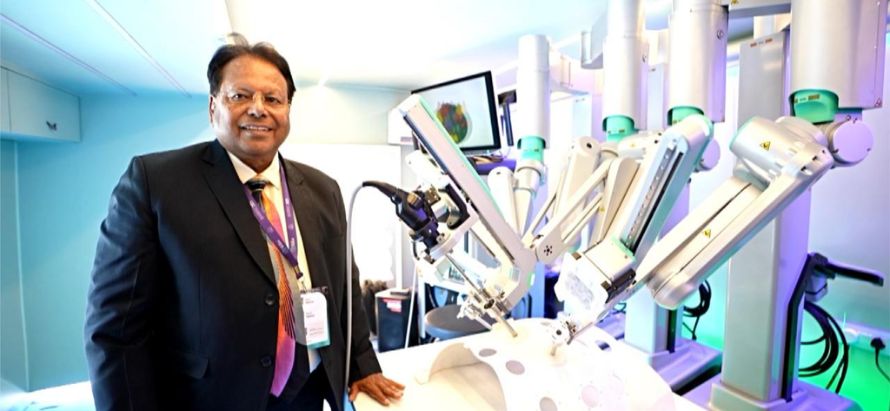
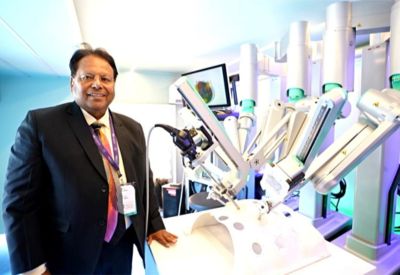
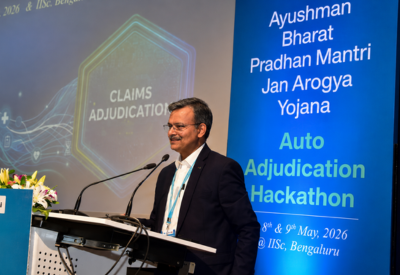
Renowned robotic cardiac surgeon Dr. Sudhir Srivastava has strongly advocated that artificial intelligence should serve as a powerful collaborator and assistant to physicians rather than a replacement. In a recent keynote address, he outlined AI’s potential to enhance diagnostic precision, surgical accuracy, workflow efficiency, and patient outcomes while stressing the irreplaceable human qualities of empathy, ethical judgment, and clinical intuition in medicine.
Glimpse:
Dr. Sudhir Srivastava, pioneer of robotic cardiac surgery and founder of SS Innovations, emphasized AI’s role in preoperative planning, intraoperative guidance, predictive risk modeling, and postoperative monitoring citing real-world examples where AI tools have reduced complications and improved efficiency. He urged ethical deployment, clinician training, transparent algorithms, and preservation of the doctor-patient bond to ensure AI augments rather than diminishes human care, particularly in India’s diverse and high-volume healthcare landscape.
Dr. Sudhir Srivastava, a globally respected robotic cardiac surgeon and the innovator behind the SSI MANTRA robotic system, delivered an insightful keynote at a prominent medical conference in New Delhi. He addressed concerns about AI potentially replacing doctors by firmly asserting that the technology is best viewed as an intelligent assistant that amplifies human expertise rather than supplanting it. Drawing from his extensive experience performing complex robotic heart surgeries in India and internationally, Dr. Srivastava illustrated how AI tools already support critical phases of care analyzing preoperative imaging to simulate procedures, optimizing surgical approaches, and predicting potential complications with remarkable accuracy.
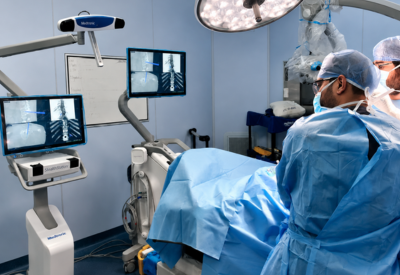
Intraoperatively, AI enhances visualization, assists in precise instrument movements, and reduces operative times while minimizing blood loss and technical errors. Postoperatively, AI-driven monitoring detects early signs of deterioration, enabling timely interventions that lower readmission rates and improve recovery. Dr. Srivastava shared data from his own centre and global studies demonstrating measurable reductions in complications and hospital stays when AI is thoughtfully integrated into surgical workflows. He stressed that these benefits arise precisely because AI handles data-intensive, repetitive tasks, freeing surgeons to focus on judgment, adaptability, and patient-specific decision-making in unpredictable scenarios.
The surgeon highlighted the uniquely human elements that AI cannot replicate: empathy during patient consultations, nuanced ethical reasoning in complex cases, the ability to adapt to unforeseen intraoperative findings, and the trust-building essential for shared decision-making. He cautioned against over-dependence on opaque AI models, advocating instead for transparent, explainable systems where clinicians can understand and override recommendations. Dr. Srivastava also called for comprehensive training programs to equip doctors with the skills to use AI as an extension of their expertise rather than a crutch.
He expressed particular optimism about India’s potential to lead in responsible AI adoption in healthcare. With the country’s vast patient volumes, diverse disease patterns, and growing digital infrastructure, India is well-placed to develop and validate AI solutions tailored to local needs. Dr. Srivastava praised national initiatives like the IndiaAI Mission and Ayushman Bharat Digital Mission but urged stronger clinician involvement in AI design, rigorous testing on Indian datasets, and ethical frameworks to prevent bias and ensure equitable benefits across urban and rural populations. He concluded that the future of medicine lies in thoughtful human-AI collaboration where technology manages routine complexity, allowing physicians to prioritize innovation, compassion, and the art of healing.
The keynote sparked engaged discussions among attendees, many agreeing that visionary clinician-leaders like Dr. Srivastava are crucial for guiding AI’s safe and effective integration into healthcare.