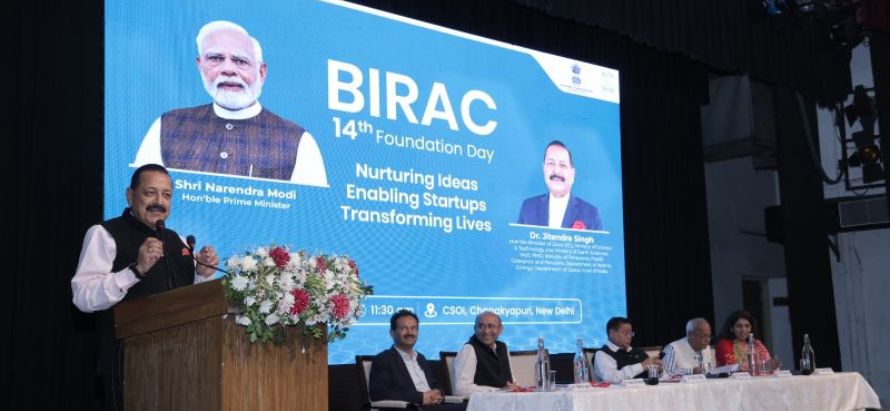
Union Minister of State (Independent Charge) for Science & Technology Jitendra Singh has revealed that India’s bioeconomy has grown exponentially from $10 billion in 2014 to over $195 billion in recent years. The minister credited strategic government initiatives, increased R&D investment, strong private sector participation, and supportive policies for transforming India into one of the world’s fastest-growing bioeconomy hubs.
Glimpse:
Speaking at a high-profile event, Dr. Jitendra Singh highlighted the bioeconomy’s remarkable 20-fold growth in just over a decade, driven by advancements in vaccines, biologics, diagnostics, bio-agriculture, and industrial biotechnology. He pointed to India’s leadership in vaccine manufacturing, biosimilars, and gene therapies, while emphasizing continued focus on innovation, startups, regulatory streamlining, and global partnerships to sustain momentum and achieve even higher targets in the coming years.
Union Minister of State (Independent Charge) for Science & Technology, Dr. Jitendra Singh, announced that India’s bioeconomy has witnessed extraordinary growth, surging from approximately $10 billion in 2014 to more than $195 billion in recent assessments. The minister shared this milestone during a major biotechnology and innovation summit, attributing the rapid expansion to a combination of visionary government policies, substantial R&D investments, robust private sector involvement, and India’s emergence as a global leader in affordable vaccines, biologics, and diagnostics.
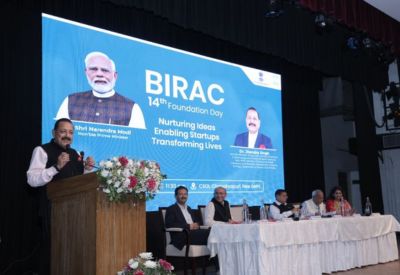
Dr. Singh highlighted key drivers behind this transformation, including the success of India’s vaccine manufacturing ecosystem which supplied over 60% of global COVID-19 vaccines the rise of biosimilars and gene therapies, growth in bio-agriculture, industrial biotechnology, and a thriving startup ecosystem supported by initiatives like BIRAC and the BioE3 Policy. He noted that the sector now contributes significantly to GDP, employment, and exports, with India ranking among the top 10 countries globally in biotechnology. The minister also pointed to the increasing role of AI, bioinformatics, and precision medicine in accelerating innovation and making advanced therapies more accessible and affordable.
The growth story is underpinned by strong policy support, including the National Biotechnology Development Strategy, PLI schemes for pharmaceuticals and medical devices, and regulatory reforms that have streamlined approvals while maintaining high safety standards. Dr. Singh emphasized that India’s bioeconomy success reflects a whole-of-government and whole-of-society approach, with close collaboration between public research institutions, private companies, startups, and international partners. He expressed confidence that the sector is on track to reach even higher milestones in the coming decade, driven by emerging areas such as synthetic biology, bio-manufacturing, and climate-resilient biotech solutions.
The minister called for continued focus on building talent pipelines, strengthening IP frameworks, fostering public-private partnerships, and ensuring equitable access to biotechnological advancements across urban and rural populations. He reiterated the government’s commitment to positioning India as a global bioeconomy leader, capable of addressing both domestic health needs and contributing to worldwide challenges like pandemics, food security, and sustainable development.
This announcement has been widely welcomed by industry leaders, researchers, and investors as a validation of India’s strategic investments in biotechnology over the past decade, reinforcing optimism about the sector’s role in driving economic growth, innovation, and improved health outcomes in the years ahead.