xCATH, a pioneer in telerobotic endovascular platforms, has integrated NVIDIA Isaac for Healthcare to enhance its robotic navigation and control systems. The collaboration brings advanced AI, simulation, and real-time computing capabilities to xCATH’s platform, enabling more precise, remote-controlled procedures for complex vascular interventions while reducing radiation exposure for patients and clinicians.
Glimpse:
By incorporating NVIDIA Isaac’s robotics and AI frameworks, xCATH’s telerobotic system gains improved path planning, real-time image-guided navigation, haptic feedback, and simulation-based training tools. The integration allows interventionalists to perform endovascular procedures (such as aneurysm coiling, stroke thrombectomy, and peripheral interventions) from remote locations with greater accuracy and safety. The enhanced platform is currently in advanced testing and is expected to accelerate clinical adoption by improving procedural efficiency and expanding access to specialized vascular care in underserved regions.
xCATH, an innovative medtech company specializing in telerobotic solutions for endovascular procedures, has announced a strategic integration with NVIDIA Isaac for Healthcare to elevate its robotic platform to the next level. The collaboration, unveiled on February 27, 2026, combines xCATH’s expertise in remote-controlled vascular interventions with NVIDIA’s powerful robotics and AI computing technologies, aiming to make complex endovascular procedures safer, more precise, and more accessible even from distant locations.
The integration leverages NVIDIA Isaac’s advanced simulation environment, real-time AI inference, and high-performance computing to enhance key aspects of xCATH’s system. This includes smarter path planning for catheter navigation, improved real-time image fusion and guidance during procedures, enhanced haptic feedback for the operator, and realistic simulation modules for training and pre-procedural rehearsal. These upgrades are expected to reduce procedure times, lower radiation exposure for both patients and interventionalists, and improve outcomes in challenging cases such as cerebral aneurysms, acute ischemic stroke thrombectomy, and complex peripheral artery interventions.
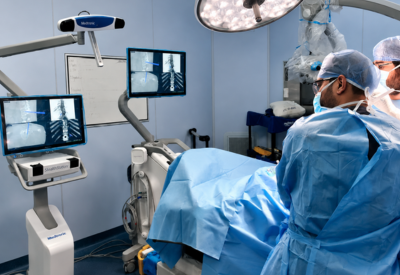
The telerobotic platform allows experienced interventionalists to perform procedures remotely, addressing the shortage of specialized vascular experts in many regions. With NVIDIA’s technology, the system can now process large volumes of imaging and sensor data in real time, enabling smoother remote control, better decision support, and the potential for AI-assisted autonomous elements under strict clinician supervision. Early testing has shown promising gains in navigation accuracy and procedural safety, with plans for expanded clinical trials in 2026–27.
xCATH and NVIDIA emphasized that patient safety and regulatory compliance remain paramount. The integrated platform is being developed with full adherence to FDA, CE Mark, and other international standards, including robust fail-safes, redundant communication channels, and transparent AI decision logs. The companies also plan to collaborate on training programs for interventionalists and simulation-based certification pathways to ensure smooth adoption.
This partnership highlights the growing convergence of robotics, AI, and healthcare, with NVIDIA’s Isaac platform increasingly being adopted by medtech innovators to bring intelligent, remote-enabled solutions to the operating room. xCATH’s enhanced telerobotic system is expected to play a key role in expanding access to life-saving endovascular care, particularly in regions with limited specialist availability.