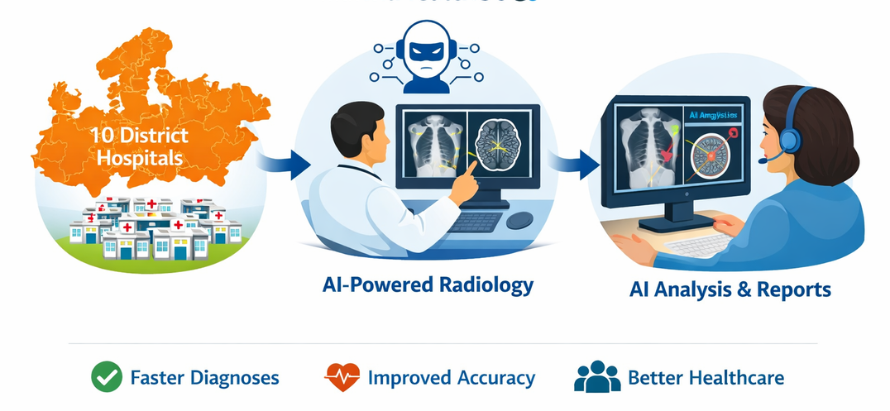
Bengaluru based startup mlHealth360 has partnered with the Madhya Pradesh Government through an MoU to launch an AI radiology pilot project in ten district hospitals, deploying the Scaida AI platform to improve diagnostic accuracy, speed up reporting, and support quicker clinical decisions in public healthcare settings.
Glimpse:
Announced on April 9, 2026, the initiative introduces mlHealth360’s cloud based Scaida AI solution for analyzing CT scans, triaging abnormalities, and generating standardized reports. The pilot integrates seamlessly with existing PACS and RIS systems and features India based data residency. It targets better early detection of critical conditions like stroke, hemorrhage, trauma, and tumors while reducing patient referrals to higher level facilities.
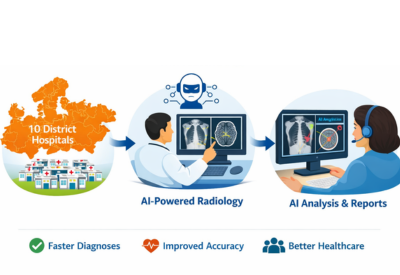
The Government of Madhya Pradesh has joined hands with mlHealth360 to bring artificial intelligence into radiology services at the district level. Under the newly signed memorandum of understanding, the Bengaluru startup will deploy its advanced Scaida AI platform across ten selected district hospitals as an initial pilot. This step aims to strengthen diagnostic capabilities in public hospitals, where timely and accurate imaging interpretation often faces challenges due to limited resources and high patient loads.
At the heart of the project lies the Scaida AI system, which automatically detects and prioritizes abnormalities in CT scans, offers real time decision support to doctors, and produces consistent radiology reports. The cloud based platform connects smoothly with the hospitals’ current Picture Archiving and Communication System (PACS) and Radiology Information System (RIS), ensuring minimal changes to daily operations. Additional features such as remote expert consultation and full compliance with India data residency requirements make it well suited for resource limited environments.
Officials expect the AI tool to deliver faster turnaround times for scan reports and help identify urgent cases more effectively. This could lead to earlier intervention for serious conditions including stroke, brain hemorrhage, trauma injuries, and tumors, ultimately reducing the need for patients from remote areas to travel to tertiary care centres. The phased rollout will begin with infrastructure assessments and system integration, followed by staff training and gradual operational implementation over the coming months.
Kumar Surender Sinwar, Founder and CEO of mlHealth360, described the partnership as a significant move toward embedding AI into everyday public healthcare delivery, with emphasis on creating real value for doctors working in high pressure settings. Dr. Narendra Gupta from the state Health Department noted that the project supports Madhya Pradesh’s larger vision of building a more efficient and technology driven health system that improves access and reduces travel burdens for patients in distant regions.
If successful, the pilot could serve as a model for wider rollout across the state, marking an important advancement in making advanced diagnostics more accessible at the grassroots level.