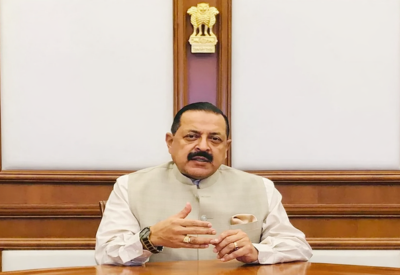
Union Minister Dr. Jitendra Singh has emphasized that a strong clinical foundation must remain central to medical education, even as artificial intelligence continues to transform healthcare. He highlighted that AI should support not replace core medical learning and hands on clinical training.
Glimpse:
Speaking on April 14, 2026, Dr. Jitendra Singh stressed that while AI is a powerful enabler in healthcare, medical education must remain rooted in fundamental concepts and clinical exposure. He cautioned that over-reliance on AI without understanding core medical principles could weaken the development of competent clinicians. The remarks were made during the release of a postgraduate medical textbook.
Union Minister Dr. Jitendra Singh has reiterated the importance of maintaining strong clinical foundations in medical education, even as artificial intelligence (AI) becomes increasingly integrated into healthcare systems. He emphasized that while AI has made access to medical information easier and more efficient, it cannot replace the need for deep conceptual understanding and hands on clinical training.
According to the minister, once a solid clinical base is established, AI can act as a valuable enabler, assistant, and facilitator in medical practice. However, he warned that relying on AI too early without mastering fundamental medical concepts could hinder the learning process and affect the development of competent clinicians capable of functioning even in resource limited environments.
Dr. Singh also highlighted the rapidly expanding body of medical knowledge, noting that the pace of research and publications has increased significantly. In this context, he stressed the need for medical education systems to focus on conceptual clarity and core clinical training while adapting to technological advancements.
He further emphasized the importance of continuously upgrading medical education frameworks to address emerging healthcare challenges, including the integration of advanced technologies and the growing complexity of diseases. Encouraging young medical professionals, he advised them to build strong fundamentals first and gradually develop specialization in their chosen fields.
The minister also pointed to initiatives like India’s GARBH-INi program as examples of how AI can enhance healthcare outcomes when built upon strong clinical foundations, reinforcing the idea that technology should complement not replace core medical expertise.