Healthcare automation startup Coral has raised $12.5 million to expand its AI-powered platform in the US, aiming to streamline administrative workflows and reduce delays in patient care.
Glimpse:
Announced in April 2026, Coral secured $12.5 million in funding led by Lightspeed and Z47. The platform automates key back office processes such as patient intake, prior authorizations, and insurance verification, achieving 99.7% accuracy and reducing intake time to under five minutes.
Healthcare automation startup Coral has raised $12.5 million in funding to scale its operations in the United States, focusing on solving one of healthcare’s biggest challenges administrative inefficiencies.
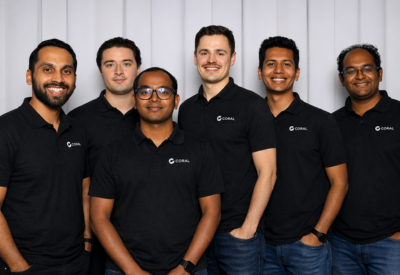
Founded by Ajay Shrihari and Aniket Mohanty, Coral is building an AI-driven platform that automates back office workflows such as patient intake, prior authorizations, insurance verification, and document processing.
A key differentiator of Coral’s approach is its ability to integrate with existing systems like electronic health records (EHRs), fax lines, and payer platforms. Instead of requiring healthcare providers to overhaul their infrastructure, the platform works within legacy systems making adoption faster and more practical.
The technology is designed to handle complex healthcare documentation, including handwritten faxes, scanned insurance cards, and authorization forms, achieving a reported 99.7% accuracy rate. This allows processes that previously took up to 30 minutes to be completed in under five minutes, significantly improving operational efficiency.
Coral initially focused on the durable medical equipment (DME) segment, where fax based workflows are still widely used. Following early success, the company expanded into infusion centers and specialty pharmacies, where similar administrative bottlenecks impact patient care delivery.
The funding will be used to expand the engineering team, hire healthcare operations experts, and accelerate product development, including tools like workflow builders and AI copilots for operational insights.
Industry estimates suggest that administrative inefficiencies cost the US healthcare system hundreds of billions of dollars annually, with delays in referrals, authorizations, and documentation directly affecting patient outcomes. Coral’s automation first approach aims to address this systemic issue by reducing manual workload and improving turnaround times.
Overall, the funding highlights a growing trend in healthcare where AI is increasingly being deployed not just for clinical decision making but also to optimize operational workflows, improve efficiency, and enhance patient experience at scale.