Glimpse:
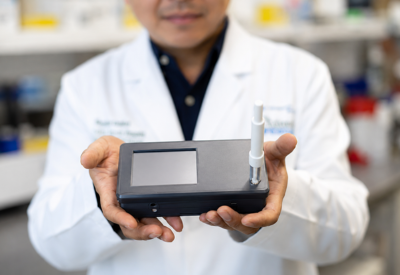
Researchers from Canada, UAE, Germany, and Switzerland argue that AI digital stethoscopes offer feasible, accurate detection of lung and cardiovascular issues linked to TB. Early studies in countries like India, Peru, South Africa, Uganda, and Vietnam demonstrate their value as screening and triage tools. Unlike costly AI-powered chest X-ray CAD systems, digital stethoscopes are portable, affordable, and person-centered, capturing subtle or inaudible sounds for early identification including asymptomatic or subclinical TB often missed by symptom screening. The commentary stresses the need for further training and validation in diverse high-burden settings to fully realize their impact on global TB case-finding goals.
Tuberculosis remains a major global health challenge, with an estimated 2.7 million people missed by current screening programs each year. Routine symptom-based screening often fails to catch asymptomatic or subclinical cases, delaying diagnosis and treatment. A new commentary published in early 2026 explores how AI-powered digital stethoscopes could bridge these critical gaps, particularly in low-resource and hard-to-reach communities.
The authors, including prominent TB expert Madhukar Pai from McGill University (Canada) and collaborators from the UAE, Germany, and Switzerland, point to growing evidence that AI-enabled digital stethoscopes deliver promising accuracy and feasibility in detecting lung and cardiovascular abnormalities. By interpreting acoustic biomarkers sounds that may be nonspecific or inaudible to the human ear these devices analyze lung audio patterns associated with TB pathology.
Studies conducted in high-TB-burden countries such as India, Peru, South Africa, Uganda, and Vietnam suggest the technology functions effectively as a screening and triage tool. It offers advantages over imaging-based approaches like WHO-recommended AI-powered computer-aided detection (CAD) for chest X-rays, which face barriers including high upfront costs, hardware needs, and operational challenges in remote areas.
The commentary emphasizes that AI digital stethoscopes are scalable, low-cost, and patient-friendly, potentially democratizing access to early TB detection. They could identify cases missed by standard symptom checks, accelerate diagnosis, and support timely interventions bringing the world closer to TB elimination targets.
While early results are encouraging, the researchers call for expanded training and validation in diverse, high-prevalence settings to confirm performance and refine algorithms. This could position the tool as a frontline solution for community health workers and primary care providers in underserved regions.
The development aligns with broader efforts to leverage AI for equitable infectious disease control, especially in countries bearing the heaviest TB burden.