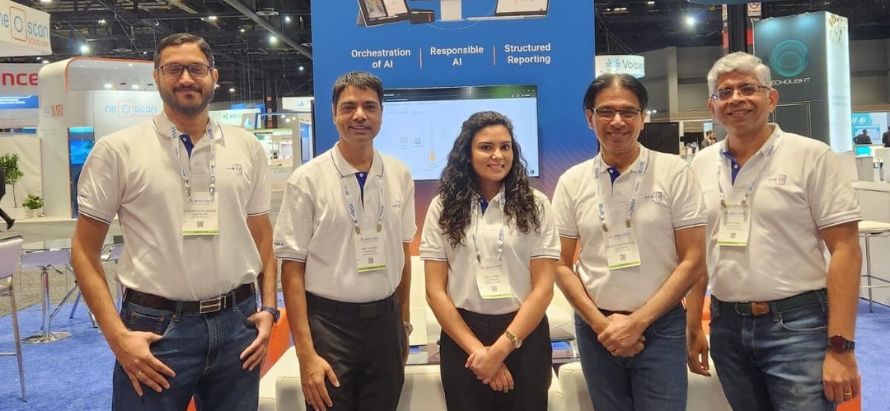
Pune-based DeepTek has rolled out its Augmento platform at India’s leading cancer centre, Tata Memorial Hospital, to enable safe and structured integration of multiple AI tools into oncology imaging workflows, improving efficiency, auditability, and clinician oversight.
Glimpse:
The deployment, announced on March 30, 2026, is supported by the IndiaAI–NCG CATCH Grant 2026. Augmento functions as a vendor-neutral orchestration layer that allows hospitals to integrate various AI algorithms into existing systems while maintaining full radiologist control. It features performance monitoring, structured reporting, and support for multimodal imaging, helping address the growing demands of cancer diagnostics at one of the world’s busiest cancer facilities.
A Pune-based AI radiology company, DeepTek, has initiated the deployment of its advanced Augmento platform at Tata Memorial Hospital to enhance AI-driven workflows in cancer imaging. This move aims to bring greater structure, efficiency, and accountability to radiology operations by allowing seamless integration of artificial intelligence tools into the hospital’s existing clinical systems. Radiologists and clinicians will be able to manage, validate, and continuously monitor AI-assisted solutions without losing authority over final diagnostic decisions.
Augmento operates as a comprehensive deployment and orchestration layer specifically built for radiology AI. It supports the integration of multiple algorithms in a controlled and fully traceable manner, incorporating important capabilities such as performance tracking, audit trails, and standardized data management. These features are particularly valuable for maintaining clinical reliability and meeting regulatory standards in high-volume cancer care settings. The platform also extends its reach across various imaging types, including CT, MRI, PET-CT, ultrasound, and Doppler studies, while its agentic reporting tools help generate more consistent and productive preliminary reports.
Beyond cancer imaging, DeepTek’s solutions have shown strong results in lung health applications, such as tuberculosis screening and the early detection of abnormalities on chest X-rays. These tools are actively used in large-scale screening programs and routine clinical environments, where they help prioritize urgent cases and assist radiologists in managing heavy workloads. With installations in more than 1,000 hospitals and imaging centres worldwide, DeepTek’s systems are already processing a high volume of scans efficiently on a global scale.
This collaboration with Tata Memorial Hospital, facilitated through the IndiaAI–NCG CATCH Grant 2026, represents a significant step toward responsible scaling of AI in Indian oncology care. By focusing on robust infrastructure rather than isolated algorithms, the initiative is expected to improve workflow productivity while keeping patient safety and clinical excellence at the forefront.