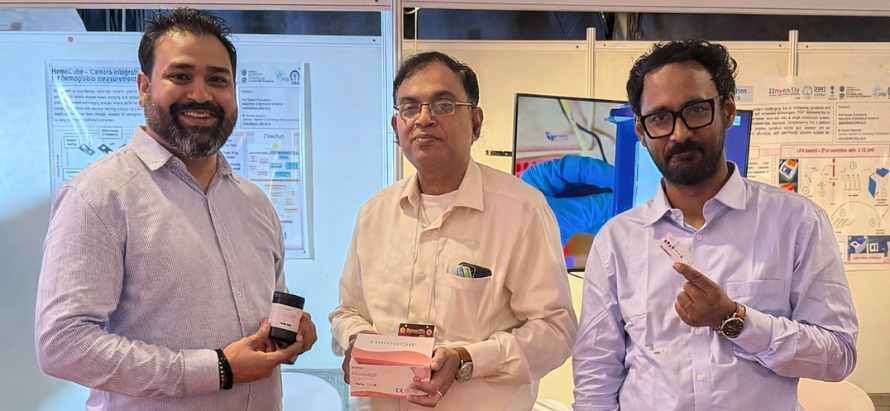
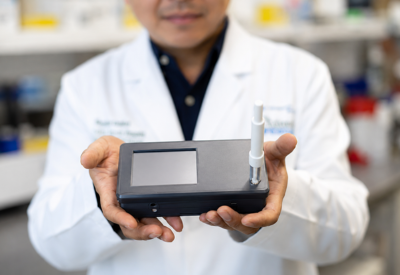
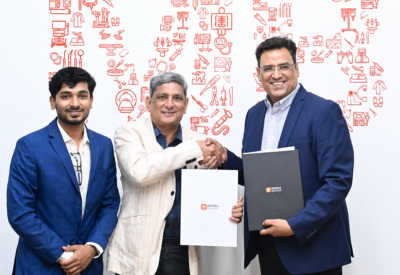
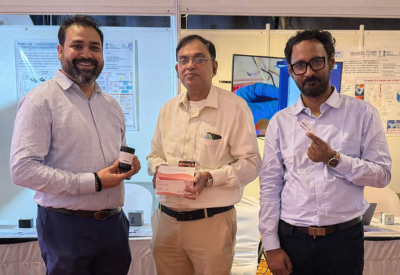
The Indian Council of Medical Research (ICMR) has extended support to HemoQR, a portable, smartphone based anaemia screening tool developed by SmartQR Technologies under the guidance of IIT Kharagpur. The device enables quick haemoglobin estimation using just a finger-prick blood sample and a paper strip, making it ideal for remote and resource limited settings.
Glimpse:
HemoQR works by placing a drop of blood on a specially designed plant derived paper strip, which is then scanned with a regular smartphone camera to estimate haemoglobin levels in under a minute. Clinical studies have shown high sensitivity of 87.09% and specificity of 96.11% compared to laboratory standards. This low cost, reagent free solution supports large scale screening programmes such as Anaemia Mukt Bharat and can be used in community health camps, primary care centres, and hospitals. It reduces dependence on bulky lab equipment while enabling timely intervention for anaemia, a major public health concern in India.
The Indian Council of Medical Research has given its backing to HemoQR, an innovative point of care device created for rapid anaemia screening. Developed by SmartQR Technologies with mentorship from IIT Kharagpur Director Professor Suman Chakraborty, the tool aims to simplify haemoglobin testing in both clinical and community settings. Anaemia remains widespread in India, particularly among women and children, and early detection is critical for effective management under national initiatives like Anaemia Mukt Bharat and the National Health Mission.
At the heart of HemoQR is a simple yet effective process: a small finger prick blood sample is applied to a biodegradable paper strip made from plant based cellulosic materials. The strip is then scanned using an ordinary smartphone camera, which analyses the image through advanced algorithms to provide a quick haemoglobin reading. This reagent free, device light approach eliminates the need for expensive laboratory infrastructure or additional hardware, making screening highly portable and suitable for remote rural areas or field health camps.
Validation studies have demonstrated promising performance. In one evaluation involving 200 participants, the system achieved 87.09% sensitivity and 96.11% specificity when benchmarked against standard laboratory methods. Results are typically available in less than a minute, offering excellent user friendliness and reliability across different haemoglobin levels. The device has also been tested at institutions such as VMMC and Safdarjung Hospital, where it proved effective for preliminary screening as part of broader diagnostic pathways.
ICMR’s support is expected to accelerate the deployment of HemoQR across public health programmes, helping frontline workers identify anaemia cases faster and facilitate prompt treatment. By bridging the gap between advanced diagnostics and grassroots healthcare, this indigenous innovation strengthens India’s efforts to combat malnutrition and improve maternal and child health outcomes in underserved regions.