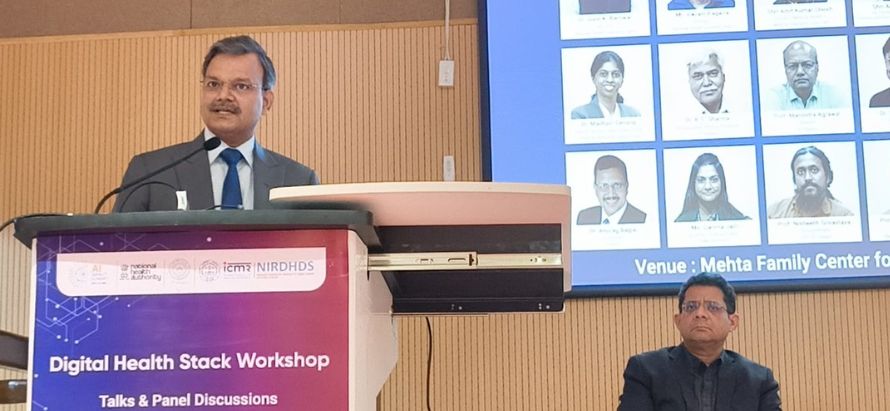
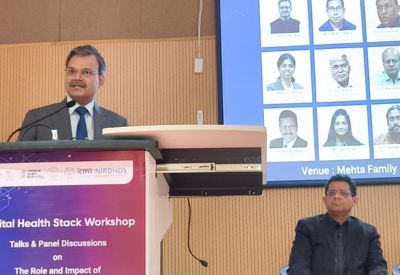
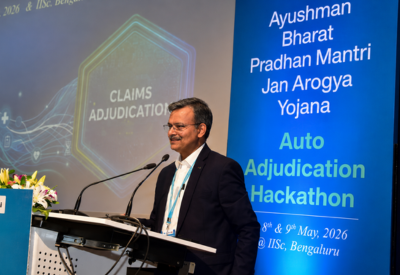
Dr. R.S. Sharma, Chief Executive Officer of the National Health Authority, delivered a compelling vision for India’s AI journey in healthcare during a keynote address at a major digital health summit held on January 23, 2026. He asserted that the country’s rapidly expanding digital public infrastructure especially under the Ayushman Bharat Digital Mission offers a once-in-a-generation opportunity to develop powerful, contextually relevant AI solutions that can truly serve India’s 1.4 billion citizens.
Dr. Sharma pointed out that ABDM has already created a secure, federated framework with over 420 million Ayushman Bharat Health Accounts (ABHA) and millions of linked health records from public and private facilities. This infrastructure includes standardised APIs, consent managers, health facility and professional registries, and robust privacy protections aligned with the Digital Personal Data Protection Act. Together, these elements form “the largest and most diverse health data ecosystem in the world,” he said, capable of powering AI models that understand India’s unique epidemiological profile, multilingual needs, and socioeconomic diversity.
The NHA CEO cautioned against over-reliance on global foundation models trained predominantly on Western datasets, which often fail to capture local disease patterns (e.g., high tuberculosis prevalence, tropical infections, nutritional deficiencies, and genetic variations prevalent in Indian populations). He urged Indian startups, researchers, and large tech companies to invest in training sovereign AI models using ABDM-linked anonymised data, with strong emphasis on bias detection, fairness, explainability, and continuous monitoring.
Dr. Sharma also highlighted practical applications where India-specific AI can deliver immediate impact: automated interpretation of chest X-rays for TB screening, predictive risk scoring for maternal and neonatal complications, early detection of diabetes complications through multimodal data (retinal scans, lab trends, lifestyle inputs), and optimised resource allocation in public health programmes. He noted that several Indian startups and institutions are already building on ABDM data sandboxes, with promising pilots in radiology, pathology, and primary care decision support.
The address called for closer collaboration among government, academia, startups, and industry to create shared data trusts, compute resources, and validation frameworks under the IndiaAI Mission. Dr. Sharma stressed that ethical AI development rooted in transparency, patient consent, and equitable access must remain non-negotiable to maintain public trust and avoid widening health disparities.
The NHA is reportedly planning to expand ABDM’s data sandbox facilities, launch AI challenge grants, and establish Centres of Excellence for healthcare AI in partnership with IITs, AIIMS, and private players to translate this vision into reality