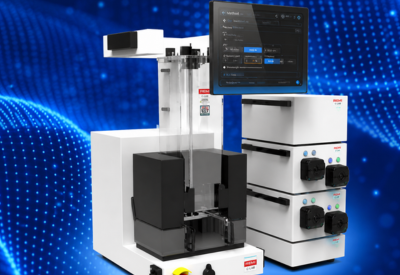
King George’s Medical University (KGMU) in Lucknow has become one of the first public medical institutions in northern India to adopt the Coroventis CoroFlow system, a cutting-edge physiology-guided coronary intervention platform. The technology enables real-time coronary pressure and flow measurements during procedures, providing precise physiological assessment of coronary artery disease and guiding optimal stent placement and revascularization strategies for improved patient outcomes.
Glimpse:
The Coroventis CoroFlow system, now live at KGMU’s cardiology department, allows interventional cardiologists to perform instantaneous wave-free ratio (iFR), fractional flow reserve (FFR), and coronary flow reserve (CFR) assessments with a single pressure-flow wire. The adoption is expected to reduce unnecessary stenting, minimize procedural complications, improve long-term patency rates, and enhance decision-making in complex cases such as multivessel disease, left main stenosis, and intermediate lesions. The system was inaugurated by senior faculty including Prof. Rishi Sethi and Prof. Akshyaya Pradhan, with initial procedures already demonstrating superior diagnostic clarity and treatment precision.
King George’s Medical University (KGMU), one of Uttar Pradesh’s premier medical institutions, has taken a major step forward in cardiovascular care by introducing the advanced Coroventis CoroFlow physiology system in its cardiology department. The launch, held on February 25, 2026, was led by Prof. Rishi Sethi, Head of Cardiology, and Prof. Akshyaya Pradhan, senior interventional cardiologist, in the presence of hospital director Prof. Bipin Puri and other senior faculty members.
The Coroventis CoroFlow platform, developed by Philips, is a next-generation tool that combines pressure and flow sensing in a single wireless pressure-flow wire, enabling comprehensive physiological assessment of coronary arteries during catheterization. Unlike conventional fractional flow reserve (FFR) systems that rely solely on pressure measurements, CoroFlow provides additional metrics such as coronary flow reserve (CFR) and index of microcirculatory resistance (IMR), giving cardiologists a more complete picture of both epicardial and microvascular coronary function.
During the inaugural procedures, the team successfully used the system to evaluate intermediate coronary lesions, assess multivessel disease, and guide revascularization in patients with complex anatomy. Early feedback from the interventional team highlighted the system’s ability to reduce diagnostic ambiguity, avoid unnecessary stenting of non-flow-limiting lesions, and optimize stent selection and placement for better long-term results.
Prof. Rishi Sethi explained that the CoroFlow system is particularly valuable in India, where coronary artery disease often presents with diffuse, multivessel involvement and microvascular dysfunction secondary to diabetes and hypertension. The technology allows for physiology-guided decision-making, which has been shown in global trials to improve clinical outcomes, reduce major adverse cardiac events, and lower healthcare costs by preventing over- or under-treatment.
The adoption at KGMU is part of the hospital’s broader push to integrate advanced interventional cardiology technologies into public-sector care. The system will be used in both elective and emergency cath lab procedures, and the cardiology department plans to conduct clinical research studies evaluating its impact on Indian patient cohorts, with a focus on cost-effectiveness and long-term outcomes.
The inauguration was followed by a hands-on training session for the cath lab team, led by Philips clinical specialists. KGMU leadership stated that the CoroFlow system will benefit thousands of cardiac patients annually, many of whom come from rural and semi-urban areas of Uttar Pradesh where timely and precise treatment can be life-saving.
This development positions KGMU as a pioneer among government medical institutions in adopting physiology-guided coronary interventions, aligning with national efforts to reduce cardiovascular mortality through advanced diagnostics and evidence-based treatment.