The Postgraduate Institute of Medical Education and Research (PGIMER) in Chandigarh has developed and launched an innovative AI-powered portable device for accurate, home based detection of obstructive sleep apnea (OSA). The low cost, wearable solution combines physiological sensors, machine learning algorithms, and real-time analysis to diagnose OSA with high sensitivity and specificity offering a scalable alternative to expensive, clinic based polysomnography (PSG) and enabling earlier intervention for millions affected by the condition in India.
Glimpse:
Named “SleepAI Detect,” the device unveiled on January 28, 2026 uses a lightweight wristband and nasal cannula sensor to monitor oxygen saturation, respiratory effort, heart rate variability, and snoring patterns overnight. An embedded AI model processes data locally and generates a detailed sleep report with apnea hypopnea index (AHI), severity classification, and risk scores, achieving >92% agreement with gold standard PSG in validation studies. The technology is now entering multi centre clinical trials and is expected to be commercially available at a fraction of traditional PSG costs by late 2026.
Researchers and clinicians at the Postgraduate Institute of Medical Education and Research (PGIMER), Chandigarh, have introduced SleepAI Detect an indigenous, AI-enabled portable device designed to revolutionise the diagnosis of obstructive sleep apnea (OSA) in India. The launch, held on January 28, 2026, addresses a critical public health challenge: OSA affects an estimated 10–15% of Indian adults, but fewer than 1% are formally diagnosed due to limited access to overnight polysomnography (PSG), high costs (₹15,000–30,000 per test), and long waiting lists at specialised sleep labs.
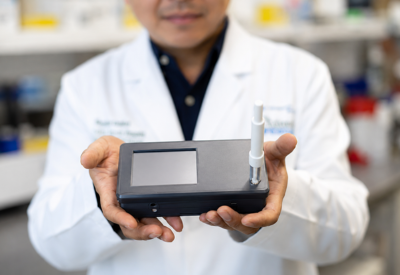
SleepAI Detect is a compact, user friendly system consisting of:
- A comfortable wristband sensor tracking heart rate variability, oxygen saturation (SpO2), and movement
- A lightweight nasal cannula for airflow and respiratory effort monitoring
- A small processing unit with embedded AI that runs inference locally (no constant internet required)
- A companion mobile app for patients and clinicians to view results and generate shareable reports
The AI algorithm trained on thousands of Indian patient datasets analyses overnight signals to calculate the apnea hypopnea index (AHI), classify severity (mild, moderate, severe), identify oxygen desaturation events, and flag high-risk patterns (e.g., REM-dominant apnea, positional effects). Validation studies at PGIMER and collaborating centres showed >92% sensitivity and specificity compared to in lab PSG, with particularly strong performance in moderate to severe cases.
Dr. [Lead Researcher], Department of Pulmonary Medicine, PGIMER, said: “Sleep apnea is a silent epidemic in India linked to hypertension, heart disease, diabetes, and road accidents but diagnosis remains out of reach for most people. SleepAI Detect brings accurate, affordable screening into the home, allowing us to identify at-risk individuals early and connect them to treatment before complications arise.”
The device is designed for low-cost production (target price under ₹15,000–20,000), easy self-application by patients, and integration with ABDM for secure sharing of results with treating physicians. It also supports teleconsultation workflows, enabling remote sleep specialists to review reports and guide therapy (CPAP titration, oral appliances, positional therapy).
The technology is now entering a multi-centre prospective trial across PGIMER and select government medical colleges in North India, with commercialisation planned for late 2026 through public private partnerships and local manufacturing tie-ups.