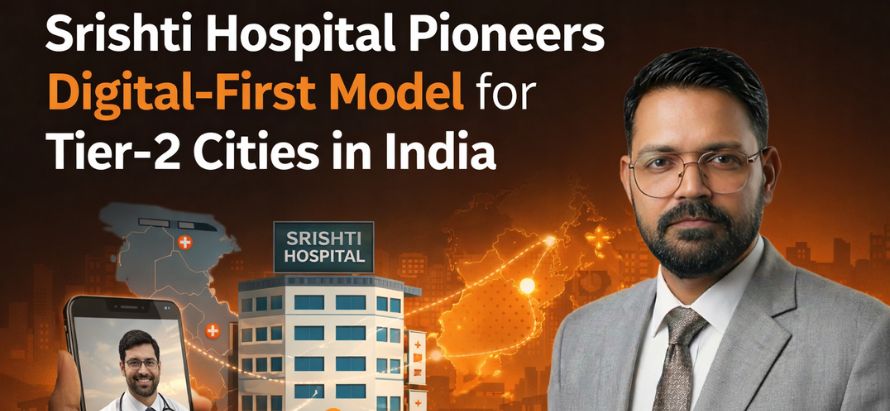
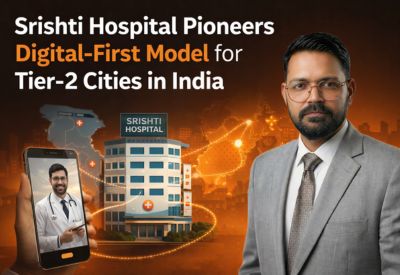
Srishti Hospital in Tamil Nadu has emerged as a model for building fully digital-first hospitals in Tier-2 and Tier-3 cities. By integrating EHR, telemedicine, AI-assisted diagnostics, automated workflows, and patient-facing apps from day one, the hospital has achieved high operational efficiency, better clinical outcomes, and strong patient satisfaction while keeping costs manageable for semi-urban populations.
Glimpse:
Unlike retrofitting legacy systems, Srishti Hospital was designed digitally from the ground up. Key elements include a unified EHR platform, cloud-based PACS and LIS, tele-ICU and tele-consultation modules, AI tools for triage and radiology support, mobile apps for appointments and reports, and paperless workflows across OPD, IPD, pharmacy, and billing. The approach has delivered faster turnaround times, reduced errors, higher bed occupancy, and improved patient trust in a Tier-2 setting offering valuable lessons for other small-to-mid-size hospitals in non-metro India.
Srishti Hospital, a multi-specialty facility in a Tier-2 city in Tamil Nadu, is gaining attention as a successful example of building a truly digital-first hospital in non-metro India. Instead of gradually digitizing an existing setup, the hospital’s leadership chose to architect every process around modern digital tools from the very beginning.
Core components of the model include: Fully integrated Electronic Health Record (EHR) with clinical decision support and longitudinal patient records Cloud-based PACS and LIS for instant access to imaging and lab results across departments Telemedicine infrastructure enabling specialist consults and follow-ups without physical travel AI-assisted tools for preliminary triage, abnormality flagging in X-rays/CTs, and predictive analytics for resource planning Patient mobile app for booking, payments, live queue status, digital prescriptions, and report delivery End-to-end automation of admission, discharge, billing, pharmacy dispensing, and inventory management
The results have been compelling: significantly shorter waiting times, near-zero documentation errors, improved continuity of care through shared records, higher patient satisfaction scores, and better utilization of beds and staff.** Importantly, the hospital has kept consultation and procedure charges competitive for the local population, proving that digital transformation can coexist with affordability in smaller cities.
Srishti’s experience highlights several practical lessons for Tier-2/3 hospital builders: prioritize cloud-native platforms for scalability, invest early in staff digital training, focus on seamless patient experience rather than just backend efficiency, and choose interoperable systems that align with ABDM standards for future-proofing.
As India pushes to strengthen healthcare beyond metros, Srishti Hospital demonstrates that going digital-first is not only feasible but can become a strong competitive and clinical advantage even in resource-constrained markets.