Glimpse:
Relife, now found contaminated with the toxic chemical diethylene glycol (DEG), had been flagged earlier in 2025 in Telangana for deficient labeling. While earlier tests didn’t detect DEG, new lab results from Madhya Pradesh implicate Relife in the wider cough syrup scandal. The shift from labeling violation to toxicity raises serious questions about surveillance, cross-state coordination, and pharmaceutical accountability.
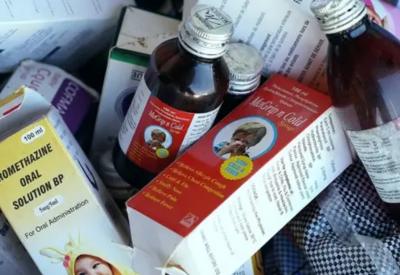
Recent investigations have revealed that the cough syrup Relife, now classified among toxic formulations, was already on Telangana’s radar earlier this year. Back then, its labeling was flagged as “Not of Standard Quality” (NSQ) specifically for failing to disclose the correct colorant name. At the time, laboratory testing did not detect diethylene glycol (DEG).
Fast forward to today: independent testing in Madhya Pradesh found that Relife contains DEG, a lethal industrial solvent suspected in multiple child deaths linked to contaminated syrups. Alongside Relife, Respifresh TR and Coldrif are also under the toxic declaration.
Telangana’s earlier warning, though limited to labeling, now appears prophetic. It suggests possible early clues were ignored or inadequately escalated. Drug regulators in Telangana are now scrambling to reconcile past tests with new findings. This also raises questions about sample quality, test sensitivity, and inter-state data sharing.
Authorities across India are reacting with urgency:
The Central Drugs Standard Control Organisation (CDSCO) has admonished manufacturers for skipping essential batch testing of raw materials and finished products, directing all states to intensify inspections.
Telangana’s DCA has issued a stop use notice for Relife and Respifresh TR and frozen stocks state wide.
Investigations are expanding. The plant producing Coldrif reportedly operated under highly unsafe conditions rusty machinery, leaking pipelines, and lax oversight.
Sresan Pharmaceutical, the Coldrif maker, has had numerous rule violations flagged by regulators, including poor raw-material sourcing, inadequate production protocols, and distribution lapses.
The escalation from labeling noncompliance to confirmed toxicity underlines a systemic failure in vigilance. Regulators are under pressure to review every flagged drug, examine past dismissals, and possibly reissue state wide recalls. For Telangana, reconciling its earlier NSQ alerts with the new crisis may become a test of credibility.