Glimpse:
The Yamuna Expressway Industrial Development Authority (YEIDA) is developing a 350-acre medical device park in Noida. GE Healthcare, Philips, and Panacea have expressed keen interest in establishing manufacturing operations on the campus, including shared scientific infrastructure for testing, prototyping, and sterilization. This move could significantly strengthen India’s self-reliance in critical medical equipment.
1. Major Industry Players Eye Noida Manufacturing
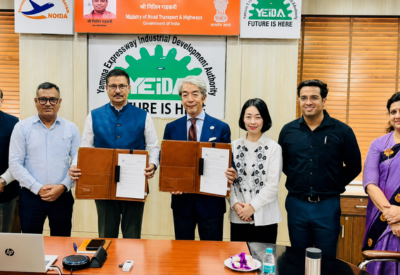
GE Healthcare, Philips, and Panacea Medical Technologies are among the leading companies that have shown strong interest in setting up units at the Medical Devices Park (MDP) in Sector 28, Noida part of a government-backed vision to make India a global med-tech manufacturing hub. A delegation from the Yamuna Expressway Industrial Development Authority (YEIDA), led by its CEO, recently met with executives of these firms in Bengaluru to highlight the benefits of manufacturing in the park.
2. Infrastructure & Incentives on Offer
The Noida MedTech Park spans 350 acres with 90% of its infrastructure including land and civil work nearly complete. It offers strong incentives such as subsidized land rates, multimodal connectivity (including proximity to the Noida International Airport), and access to Common Scientific Facilities (CSFs) for testing, prototyping, and sterilization, which are to be shared by multiple manufacturers. GE and Philips have expressed particular interest in these shared facilities, which would reduce their cost and complexity of setting up ground-up R&D and production.
3. Strategic Alignment with National Goals
The interest shown by these global and domestic players aligns with India’s broader push for import substitution in the medical device space. Currently, a significant portion of advanced medical devices are imported. The Noida park is being developed to support “Make in India” goals by enabling local production of imaging devices, critical care systems, and diagnostic instruments.
4. Economic & Healthcare Impact
If these companies set up manufacturing in the park, it could significantly boost jobs, innovation, and export potential. With 59 firms already allotted land and a projected investment of ₹415 crore, the park is expected to generate thousands of jobs. For GE Healthcare, which is already manufacturing devices like CT scanners, ventilators, and X-ray machines in India, this expansion could deepen its local footprint. Panacea a key Indian device maker could scale its capacity further, while Philips’ involvement could bring advanced imaging and diagnostic production closer home.