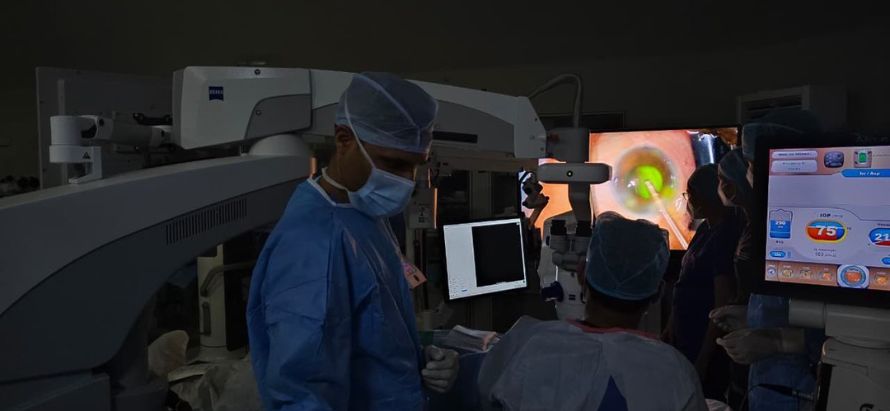
In a landmark achievement for Indian ophthalmic care, the Army Hospital (Research & Referral) in Delhi Cantt has pioneered the nation’s first 3D Flex Aqueous Angiography integrated with iStent a cutting-edge minimally invasive glaucoma surgery (MIGS). This procedure, conducted successfully in late December 2025, combines high-definition real-time imaging with precise micro-implant placement to address impaired aqueous humor outflow, the root cause of elevated intraocular pressure in glaucoma.
Glaucoma, often called the “silent thief of sight,” progresses without early symptoms and is a major cause of irreversible blindness in India. Traditional treatments rely on medications, laser, or surgery, but outcomes vary due to unpredictable drainage pathways. 3D Flex Aqueous Angiography revolutionizes this by injecting a safe tracer dye and using advanced Spectralis imaging (Heidelberg Engineering) with a flexible, stand-mounted setup providing dynamic, 3D visualization of outflow channels during surgery.
Paired with a state-of-the-art 3D operating microscope, surgeons gain unprecedented clarity to target blocked segments accurately. The iStent, a microscopic trabecular micro-bypass device (smaller than a grain of rice), is then implanted precisely to enhance natural drainage, lowering pressure safely and effectively.
Brigadier Dr. Sanjay Mishra, Head of Ophthalmology, led the procedure, marking a strategic advancement for the Armed Forces Medical Services (AFMS). The success has prompted procurement of similar systems for Command Hospital Lucknow, extending benefits to personnel and civilians across multiple states.
This first-of-its-kind integration in India elevates glaucoma care to global standards, minimizing risks, improving long-term vision preservation, and reducing dependency on daily eyedrops.