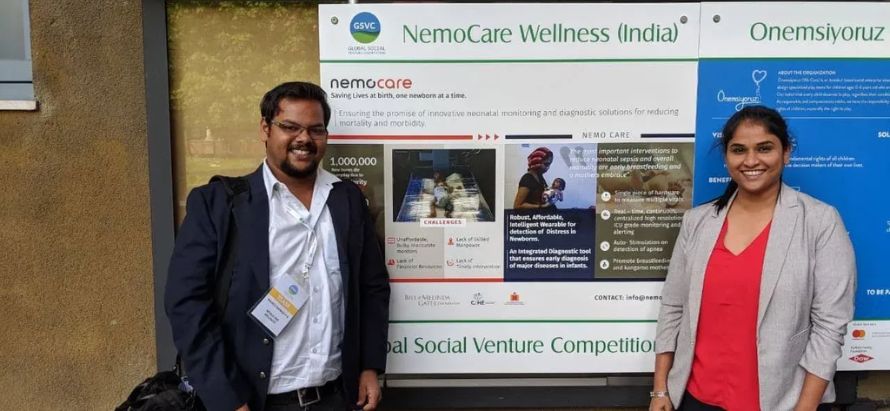
NemoCare has taken a significant step toward redefining neonatal care in India by expanding the clinical use of its flagship product Raksha beyond intensive care units. The wearable monitoring system, a soft, adhesive patch placed on the infant’s chest, now supports continuous vital signs tracking in regular paediatric wards, post-NICU step-down units, and even home environments after discharge.
Raksha monitors five key parameters in real time:
- Heart rate
- Respiratory rate
- Temperature
- Oxygen saturation (SpO₂)
- Body movement/activity
Unlike traditional wired monitors, Raksha is wireless, lightweight, and non-restrictive, allowing mothers to hold, feed, and bond with their babies without interrupting monitoring. The device streams data to a tablet/smartphone dashboard for nurses/doctors and includes customizable alerts to reduce alarm fatigue.
Clinical validation (studies conducted at leading Indian hospitals) showed:
95% accuracy across parameters compared to gold-standard monitors
- Significant reduction in missed deteriorations
- Lower false alarms than conventional systems
- Improved parent satisfaction and bonding time
The expansion beyond ICUs addresses a critical gap: many neonates in India remain in “step-down” or regular wards after initial stabilization but are still vulnerable to sudden deterioration (e.g., apnoea, sepsis, respiratory distress). Continuous monitoring in these settings can prevent escalations back to ICU, reduce hospital stays, and lower overall costs.
Post-discharge home use is also now supported, allowing high-risk babies (preterm, low birth weight, or post-surgical) to be monitored remotely with alerts sent to parents and clinicians. This bridges the critical transition period when readmission risk is highest.
Dr. Rohan Pandey, CEO & Co-founder of NemoCare, stated: “We started with the NICU because that’s where the need is most acute. But the real impact comes when we can monitor babies everywhere they are wards, homes, step-down units. Raksha was built to give every newborn the chance at continuous care, not just the sickest ones.”
The system is now deployed in multiple hospitals across India and is being evaluated for integration with national programs like the Special Newborn Care Units (SNCUs) and Ayushman Bharat Digital Mission (ABDM) for seamless data sharing.