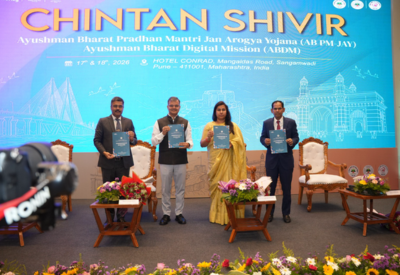
India’s digital health journey has accelerated dramatically since the launch of the Ayushman Bharat Digital Mission (ABDM) in September 2021. What began as an ambitious blueprint to create a unified, consent-based digital health ecosystem has matured into one of the world’s largest and fastest-growing national digital health programmes. As of January 2026, more than 420 million citizens have been issued Ayushman Bharat Health Accounts (ABHA) a unique 14-digit digital health ID that enables secure, portable access to health records across public and private providers.
The mission’s core infrastructure comprising the ABHA ID, Health Facility Registry (HFR), Health Professional Registry (HPR), Health Information Exchange (HIE), and consent managers ensures that health data remains federated, patient-controlled, and interoperable. This architecture has enabled practical tools that are now in everyday use: Scan & Share QR codes for paperless OPD registration (achieving over 91% adoption in Bihar), e-prescriptions, digital lab and imaging reports, and seamless sharing of discharge summaries and consultation notes.
Telemedicine has been a major success story. The eSanjeevani platform, integrated with ABDM, has facilitated millions of consultations, particularly benefiting rural and remote populations. States such as Andhra Pradesh, Uttar Pradesh, and Odisha have reported substantial reductions in patient travel, shorter waiting times, and improved follow-up for chronic conditions like diabetes, hypertension, and tuberculosis.
AI and advanced analytics are increasingly embedded in public health delivery. Several states and institutions have piloted AI tools for chest X-ray interpretation, bone age assessment, early disease detection, and predictive risk scoring. AIIMS New Delhi, for example, has deployed indigenous AI for faster chest X-ray reporting, while initiatives such as Gujarat CARES 2025 are using AI to generate population-level insights for preventive care and policy planning.
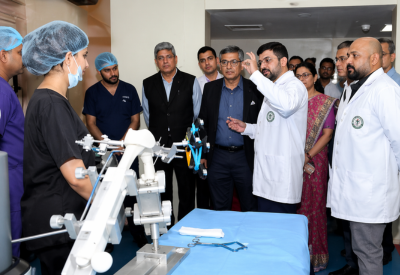
Private sector contributions have been equally transformative. Platforms like Tata 1mg, Practo, and PharmEasy have expanded omnichannel models, combining online services with hundreds of offline stores and quick-commerce delivery. Hospital chains such as Apollo, Fortis, and Max Healthcare have digitised workflows, introduced robotic surgery, and integrated remote monitoring. Startups like Dozee (contactless vitals monitoring), Qure.ai (AI radiology), and NemoCare (neonatal wearables) are delivering clinically validated solutions that are being adopted in both public and private settings.
Despite remarkable progress, significant challenges remain. The digital divide particularly in rural areas with poor connectivity and low digital literacy continues to exclude large segments of the population. Elderly patients, women in conservative households, and marginalised communities often face barriers to adoption. Privacy concerns, cybersecurity risks, and uneven state-level implementation also persist. Yet, the trajectory is unmistakably positive: high-adoption states are demonstrating real reductions in out-of-pocket expenditure, faster diagnosis, better continuity of care, and more efficient public health surveillance.
As India moves deeper into 2026, ABDM and its ecosystem of innovations are no longer experimental they are foundational to delivering equitable, efficient, and future-ready healthcare to 1.4 billion people.