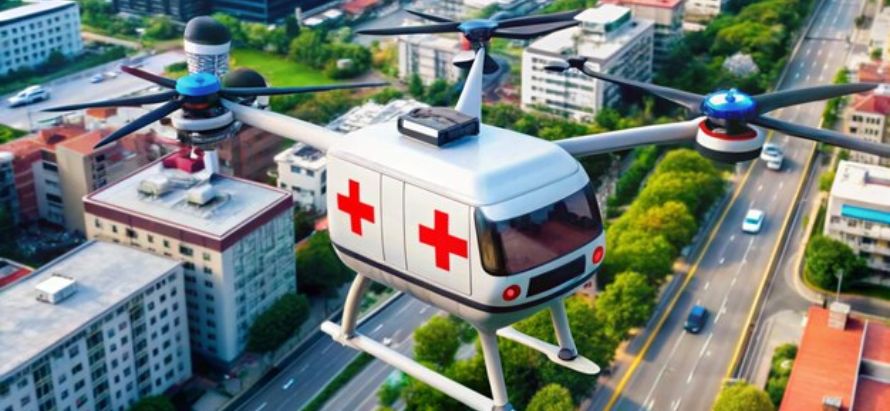
Andhra Pradesh is set to pioneer the use of human-carrying drone ambulances in India, with Chief Minister N. Chandrababu Naidu announcing the state’s commitment to develop and deploy this technology for emergency medical services. The decision, taken during a high-level review of the Health, Medical & Family Welfare Department on January 19, 2026, addresses one of the most persistent challenges in rural and tribal healthcare: long delays in reaching critically ill patients due to poor road connectivity, seasonal flooding, and difficult terrain.
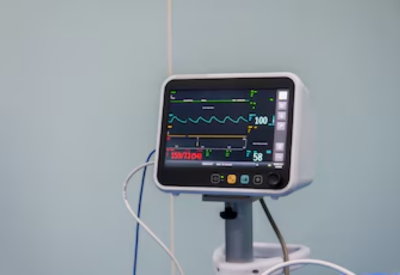
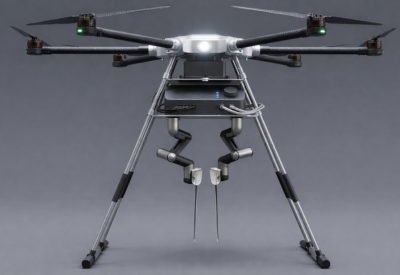
The proposed drone ambulance will be a heavy-lift, vertical take-off and landing (VTOL) platform capable of carrying one patient on a stretcher along with a medical attendant or paramedic. It is expected to have a range of 30–50 km and flight endurance of 30–45 minutes—sufficient to connect remote villages to the nearest community health centre, area hospital, or district hospital. The system will be equipped with basic life-support features such as oxygen, defibrillator, and real-time vital sign transmission to receiving facilities.
The Chief Minister has instructed the Health Department to partner with leading drone manufacturers, aerospace research bodies (including DRDO and private players like IdeaForge and Garuda Aerospace), and academic institutions to design a prototype compliant with DGCA regulations for manned and medical drone operations. The project timeline targets initial testing within 12–18 months and limited operational deployment in select high-need districts (including tribal areas of Visakhapatnam, Alluri Sitharamaraju, and Parvathipuram Manyam) by late 2027.
This initiative builds on Andhra Pradesh’s earlier adoption of drone technology for medical supply delivery (vaccines, blood, and organs) and aligns with the state’s broader vision of becoming a hub for innovative healthcare solutions. CM Naidu emphasised that the drone ambulance would not replace road ambulances but serve as a critical supplement in situations where time is the deciding factor—such as snake bites, obstetric emergencies, trauma, and cardiac arrests in remote locations.
The state government has allocated initial funding for feasibility studies, prototype development, and regulatory approvals, with potential support from central schemes under the Ministry of Civil Aviation and Ministry of Health and Family Welfare. Officials are also exploring public-private partnership models to scale the project after successful pilots.
The announcement has been welcomed by public health experts and emergency medicine specialists, who note that drone-based emergency response could reduce critical delays by 50–70% in hard-to-reach areas, potentially saving thousands of lives annually in a state with significant rural and tribal populations.