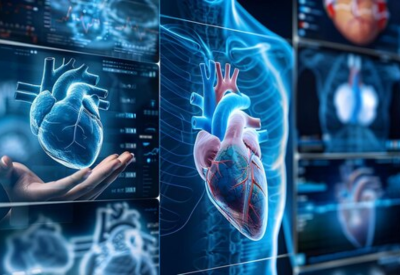
A multidisciplinary team at IIT Indore, led by researchers from the Departments of Electrical Engineering, Biosciences & Biomedical Engineering, and Computer Science & Engineering, has developed a next-generation AI-powered digital human replica designed specifically for disease detection and physiological simulation. The breakthrough, detailed in a peer-reviewed publication released on January 20, 2026, represents one of India’s most advanced efforts to bridge computational modelling with clinical diagnostics.
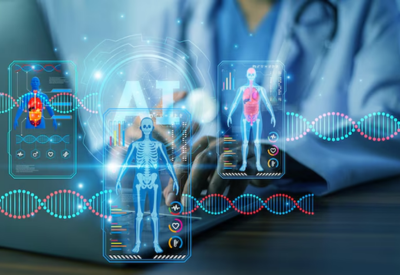
The digital replica functions as a virtual physiological twin: it integrates multimodal data high-resolution medical imaging (MRI, CT, ultrasound), time-series biosignals (ECG, EEG, PPG), genomic and proteomic profiles, and lifestyle parameters—to construct a dynamic, patient-specific model of organ function and systemic interactions. Advanced deep learning architectures, including graph neural networks and physics-informed neural networks, enable the model to simulate real-time physiological responses, predict disease trajectories, and identify deviations from healthy baselines with high precision.
Unlike traditional diagnostic tools that rely on static snapshots, the IIT Indore replica continuously evolves with incoming patient data, detecting subtle, early-stage anomalies that are often invisible to conventional imaging or lab tests. Initial studies demonstrated its ability to flag preclinical markers of heart failure, Alzheimer’s disease progression, pulmonary fibrosis onset, and metabolic dysregulation months before clinical thresholds are crossed.
The platform’s design prioritises interpretability: clinicians receive not only predictions but also explainable visualisations showing which physiological pathways or biomarkers contributed most to the risk score. This transparency is critical for building trust and facilitating adoption in clinical settings.
Prof. Jayaprakash Murugesan, lead investigator from IIT Indore, explained the motivation: “Many diseases progress silently for years before symptoms appear. Our AI-driven human replica allows us to look inside the body’s physiological dynamics and catch these silent changes early when interventions are most effective. It’s like having a virtual patient that evolves in parallel with the real one.”
The technology has already undergone preliminary validation using anonymised datasets from Indian hospitals and international biobanks. The team is now preparing multi-centre prospective studies to further assess diagnostic accuracy, clinical utility, and impact on patient outcomes. IIT Indore has filed patents covering the core algorithms and simulation framework, and discussions are underway with industry partners for potential commercialisation as a clinical decision support tool.
This development comes at a time when India is aggressively pursuing AI-led healthcare innovation under the IndiaAI Mission and National Digital Health Mission. By creating a locally developed, scalable digital twin technology, IIT Indore is contributing to the country’s goal of achieving self-reliance in advanced diagnostics while addressing the unique epidemiological patterns seen in Indian populations.
The digital human replica holds promise not only for early disease detection but also for virtual clinical trials, personalised treatment simulation, and training of medical students in complex pathophysiology all without risk to real patients.