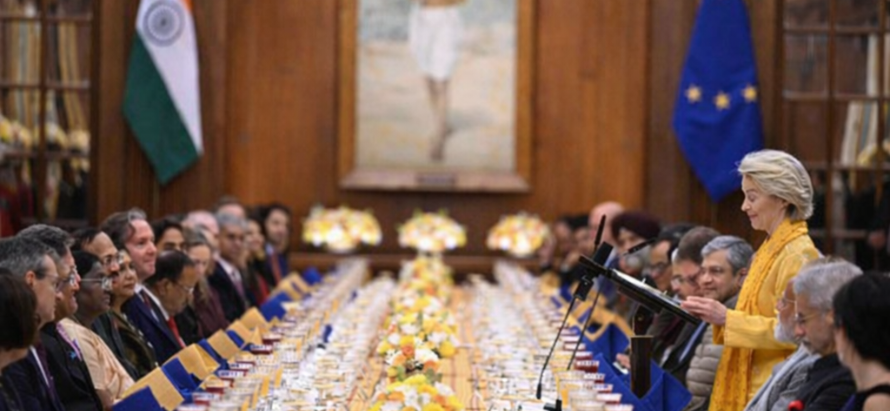
After more than a decade of intermittent negotiations, India and the European Union have reached a political agreement on a comprehensive Free Trade Agreement that dramatically opens the world’s second largest pharmaceutical and medical technology market to Indian manufacturers. The breakthrough, confirmed following a high level ministerial meeting on January 24, 2026, ends years of deadlock over tariffs, intellectual property, regulatory alignment, and market access commitments.
Under the terms of the FTA, the EU will eliminate or phase down to zero tariffs on over 90% of India’s pharmaceutical exports (generics, biosimilars, vaccines, and over the counter products) and a wide range of medical devices (including consumables, diagnostics, imaging equipment, surgical instruments, and hospital furniture). India, in turn, has agreed to progressively reduce tariffs on EU origin speciality drugs, high end diagnostics, and certain precision devices, while maintaining calibrated protections for sensitive domestic segments during transition periods of 5–10 years.
The agreement addresses several long-standing non-tariff barriers. It establishes mutual recognition pathways for Good Manufacturing Practice (GMP) inspections, streamlined marketing authorisation procedures for generics and biosimilars, and joint working groups to harmonise standards on clinical trials, pharmacovigilance, and device classification. On intellectual property, the FTA incorporates TRIPS-plus provisions (data exclusivity, patent term extensions for certain innovations) while preserving India’s flexibilities under TRIPS Article 31 for compulsory licensing in public health emergencies.
The economic stakes are enormous. The EU pharmaceutical market alone is valued at approximately €300–320 billion annually, with medtech adding another €250–260 billion. Indian exports to the EU currently stand at €8–10 billion per year primarily generics and APIs leaving substantial untapped potential. Industry estimates suggest the FTA could lift Indian pharma and medtech exports to the EU to €25–30 billion annually within five to seven years of full implementation, driven by tariff elimination, faster market entry, and improved competitiveness against Chinese suppliers.
The deal is expected to generate significant domestic benefits: tens of thousands of direct and indirect jobs in manufacturing, R&D, quality assurance, and logistics; increased FDI inflows into greenfield and brownfield facilities; and stronger supply chain resilience for both India and the EU. It also includes cooperation clauses on capacity building, joint research in antimicrobial resistance, vaccine development, and digital health interoperability.
The agreement now moves to legal scrubbing, translation into all EU languages, and ratification by the European Parliament and Indian Parliament. Provisional application of tariff reductions could begin as early as late 2026, with full entry into force targeted for 2027–2028.