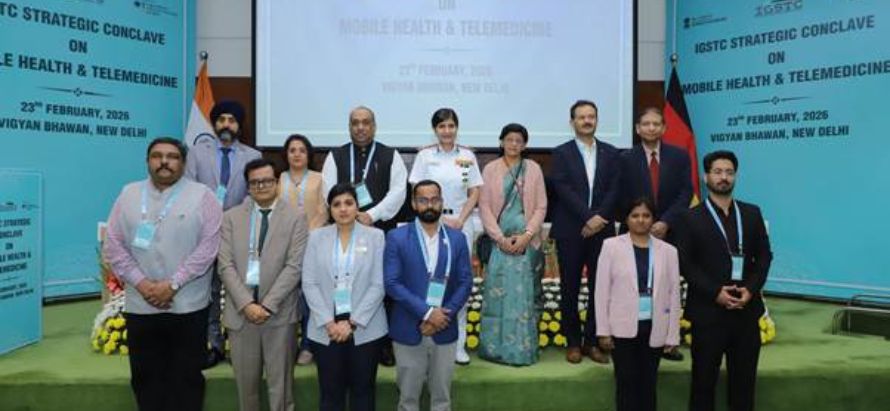
The Department of Science and Technology (DST) and Biotechnology Industry Research Assistance Council (BIRAC) have announced a major push for innovation-led partnerships to rapidly scale mobile health and telemedicine solutions nationwide. The initiative focuses on co-developing affordable, accessible, and India-specific technologies through collaborative funding, regulatory fast-tracking, and ecosystem building targeting rural, semi-urban, and underserved populations to bridge the digital health divide.
Glimpse:
DST and BIRAC will jointly fund and support consortia of startups, hospitals, academic institutions, and technology providers to build next-generation mobile health platforms, telemedicine ecosystems, remote monitoring devices, and AI-enabled triage tools. The program emphasizes low-cost, offline-capable solutions, multilingual interfaces, integration with Ayushman Bharat Digital Mission (ABDM), and real-world pilots in high-burden districts. The push aims to increase telemedicine consultations by 5–10 times in rural areas and improve chronic disease management through mobile-first interventions within the next 3–5 years.
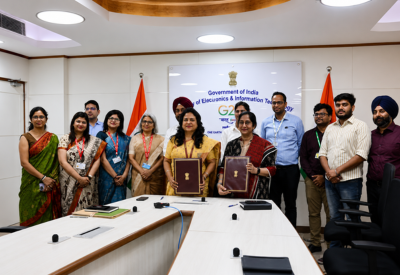
The Department of Science and Technology (DST) and the Biotechnology Industry Research Assistance Council (BIRAC) have jointly launched a strategic initiative to accelerate innovation-led partnerships that will scale mobile health and telemedicine solutions across India. The announcement, made during a high-level meeting at the India AI Impact Summit 2026, underscores the government’s determination to make digital health tools a cornerstone of equitable healthcare delivery, particularly in rural, tribal, and semi-urban regions where access to specialists remains severely limited.
Under the new program, DST and BIRAC will provide catalytic funding, technical mentorship, regulatory facilitation, and ecosystem support to selected consortia comprising healthtech startups, medical institutions, academic research groups, and technology providers. The focus will be on developing and deploying solutions that are affordable, scalable, resilient to poor connectivity, and culturally appropriate for India’s diverse population.
Priority areas identified for support include:
Mobile-first chronic disease management platforms for diabetes, hypertension, cardiovascular disease, and COPD, with features such as remote vital monitoring, medication adherence tracking, lifestyle coaching, and AI-driven risk alerts Telemedicine ecosystems with multilingual voice/video interfaces, offline consultation queuing, and integration with ABDM for secure ABHA-linked records AI-enabled triage and decision-support tools for frontline health workers (ASHAs, ANMs) to prioritize cases and escalate high-risk patients in real time Low-cost diagnostic devices (portable ultrasound, ECG, fundus cameras, point-of-care blood analysers) with edge AI for instant preliminary interpretation Digital health literacy modules and community outreach programs to increase adoption in low-literacy and low-connectivity areas
The initiative builds on existing successes under the National Health Mission, Ayushman Bharat Digital Mission, and earlier DST-BIRAC programs that have already supported dozens of mobile health and telemedicine pilots. It introduces new mechanisms such as fast-track regulatory approvals for SaMD (Software as Medical Device), priority access to clinical validation sites, and milestone-based funding to de-risk innovation.
DST Secretary Prof. Abhay Karandikar emphasized that the program will prioritize solutions that demonstrate measurable impact on health outcomes, cost reduction, and equity in access. BIRAC Managing Director Dr. Renu Swarup added that the partnerships will focus on Indian IP generation, local manufacturing, and export readiness to position India as a global supplier of affordable digital health technologies.
The program will initially fund 20–25 high-potential consortia in the first phase, with a dedicated corpus of ₹500–700 crore over three years. Selected projects will undergo rigorous clinical and technical validation in real-world public health settings before scaling through government health missions and private sector channels.
This push is widely seen as a strategic move to make India not just a consumer, but a leading producer and exporter of mobile health and telemedicine innovations leveraging the country’s engineering talent, clinical data richness, and massive population-scale testing opportunities.