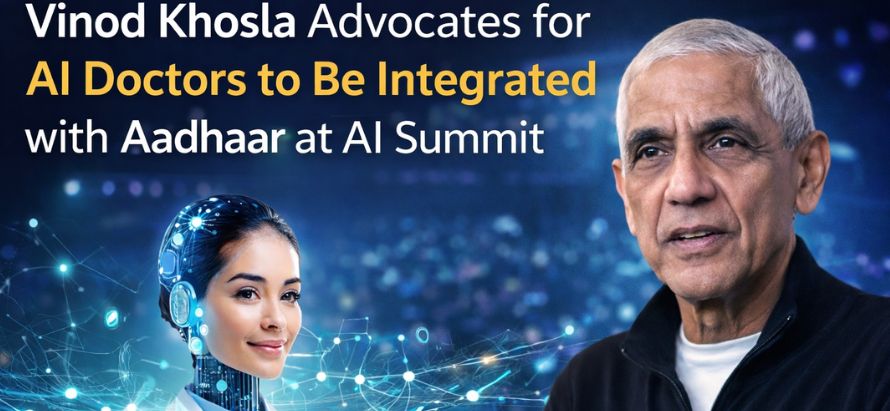
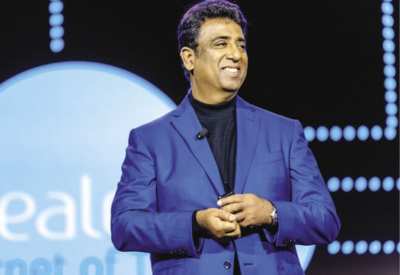
Vinod Khosla, prominent venture capitalist and tech visionary, has proposed that AI-powered doctors should be linked with India’s Aadhaar system to enable secure, scalable, and personalized healthcare delivery nationwide. Speaking at the India AI Impact Summit 2026, Khosla argued that such integration would allow AI physicians to access verified health histories, deliver continuous care, ensure privacy through consent frameworks, and dramatically expand access to quality medical advice in underserved areas.
Glimpse:
During his keynote address at the AI Impact Summit 2026, Khosla emphasized that AI doctors autonomous or assistive systems capable of diagnosis, treatment planning, and follow-up should be officially recognized and integrated with Aadhaar to create a national digital health identity layer. He highlighted benefits including seamless longitudinal care, fraud-proof prescriptions, real-time chronic disease monitoring, and equitable access in rural India, while stressing the need for strong privacy safeguards, clinician oversight, and regulatory approval to prevent misuse and build public trust.
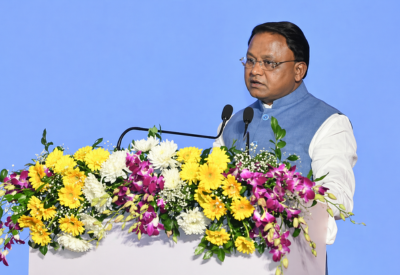
Vinod Khosla, the billionaire venture capitalist and co-founder of Sun Microsystems, delivered a provocative and forward-looking keynote at the India AI Impact Summit 2026 in New Delhi, calling for the formal integration of AI doctors with India’s Aadhaar digital identity system. Khosla argued that AI systems capable of functioning as virtual physicians analyzing symptoms, medical history, lab results, imaging, and genomic data to provide diagnosis, treatment recommendations, and ongoing monitoring should be recognized as legitimate healthcare providers and linked to every citizen’s Aadhaar number.
He envisioned a future where every Indian has an “AI doctor in their pocket” that continuously tracks health parameters through wearables and smartphones, accesses verified past records via Aadhaar-linked consent, delivers personalized preventive advice, flags early risks for conditions like diabetes, hypertension, cardiac events, and cancers, and seamlessly escalates complex cases to human specialists. Khosla stressed that Aadhaar’s biometric authentication and existing consent framework (already used in ABDM) would ensure privacy and security, while enabling longitudinal, portable health records that follow patients across providers and states.
The proposal comes amid rapid advancements in AI healthcare models globally and in India, where tools for TB screening, diabetic retinopathy detection, stroke triage, and clinical decision support are already deployed at scale in public programs. Khosla pointed out that India’s unique combination of massive population-scale data, linguistic diversity, high disease burden, and widespread Aadhaar penetration creates an unparalleled opportunity to build sovereign, inclusive AI health systems that could leapfrog traditional healthcare infrastructure constraints.
Khosla acknowledged potential concerns around data privacy, algorithmic bias, over-reliance on AI, and the risk of replacing human empathy in medicine. He advocated for strong safeguards mandatory clinician-in-the-loop for high-stakes decisions, transparent model validation on Indian datasets, bias audits across demographics, and strict enforcement of the DPDP Act and ABDM consent mechanisms to ensure AI augments rather than supplants human care. He also called on the government, regulators (CDSCO, ICMR, NITI Aayog), and private sector to co-create a national framework for “AI doctors” that balances innovation with public safety and trust.
The speech has sparked intense debate within the Indian healthtech and policy community. Supporters see it as a visionary step toward universal access and preventive care at scale, while critics caution that premature integration with Aadhaar could raise privacy risks, exacerbate digital divides, and undermine the role of qualified human doctors. Government officials present at the summit indicated that the idea aligns with ongoing discussions under the IndiaAI Mission and ABDM evolution, though no immediate policy decision was announced.