Google has intensified its real-world healthcare AI strategy by launching large-scale clinical trials and expanding global deployments of its AI-powered tools. The initiatives focus on validating AI models for diagnostics, predictive analytics, clinical decision support, and workflow optimization in diverse hospital settings, aiming to demonstrate safety, efficacy, and measurable impact while accelerating regulatory approvals and adoption worldwide.
Glimpse:
Google’s latest efforts include multi-centre clinical trials in the U.S., Europe, and India to test AI tools for radiology interpretation, early sepsis detection, diabetic retinopathy screening, and heart failure prediction. Parallel global deployments are underway in partner hospitals and health systems, integrating AI into EHRs, imaging platforms, and telehealth workflows. Early results show improved diagnostic accuracy, reduced time-to-treatment, and better resource utilization, with Google emphasizing ethical AI, clinician oversight, and data privacy as core principles.
Google has significantly deepened its commitment to real-world healthcare AI by announcing a series of large-scale clinical trials and accelerated global deployments of its AI-powered solutions. The company revealed details during a dedicated healthcare AI summit in late February 2026, outlining partnerships with leading hospitals, academic medical centres, and health systems across the U.S., Europe, India, and Southeast Asia. These efforts aim to move beyond controlled pilots to rigorous, multi-centre validation that proves AI’s safety, clinical effectiveness, and operational value in diverse care settings.
Key clinical trials now underway include prospective studies evaluating Google’s AI for radiology (detecting abnormalities in X-rays, CTs, and MRIs with high sensitivity), early sepsis prediction using real-time vital signs and EHR data, diabetic retinopathy screening in community and hospital settings, and heart failure decompensation forecasting to enable proactive interventions. The trials involve thousands of patients and are designed to meet stringent regulatory standards (FDA, EMA, CDSCO) for potential clearance as Software as a Medical Device (SaMD). In India, collaborations with AIIMS, Apollo Hospitals, and state health departments are testing localized models trained on diverse Indian datasets to ensure relevance for regional disease patterns and resource constraints.
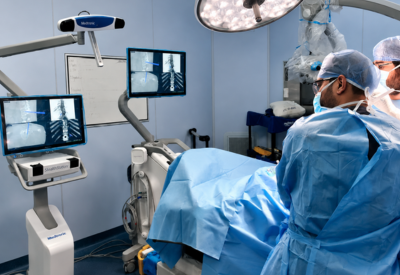
Simultaneously, Google is scaling deployments of its AI tools in live clinical environments. Hospitals are integrating AI into existing EHRs and imaging systems to provide real-time decision support such as flagging critical findings in radiology reports, prioritizing high-risk patients in emergency departments, and automating preliminary documentation. Early adopter sites report measurable gains: 20–40% faster turnaround on diagnostic reads, earlier detection of deterioration events, reduced diagnostic errors, and improved clinician satisfaction due to less time spent on routine tasks. The deployments prioritize transparency (explainable AI outputs), clinician-in-the-loop design (mandatory human review for high-stakes decisions), and robust privacy safeguards compliant with HIPAA, GDPR, and India’s DPDP Act.
Google executives stressed that these initiatives represent a shift from experimental AI to production-grade systems embedded in daily care delivery. The company is investing heavily in clinician training, bias mitigation across diverse populations, and independent audits to build trust among healthcare providers and regulators. Partnerships with health systems, payers, and governments are expanding rapidly, with a focus on generating real-world evidence that demonstrates ROI through reduced hospitalizations, lower costs, and better patient outcomes.
This aggressive push positions Google as a frontrunner in translating AI research into tangible healthcare impact, while addressing longstanding concerns around validation, equity, and integration. The clinical trials and deployments are expected to yield peer-reviewed publications and regulatory submissions throughout 2026–27, paving the way for broader adoption of AI as a standard tool in global healthcare delivery.