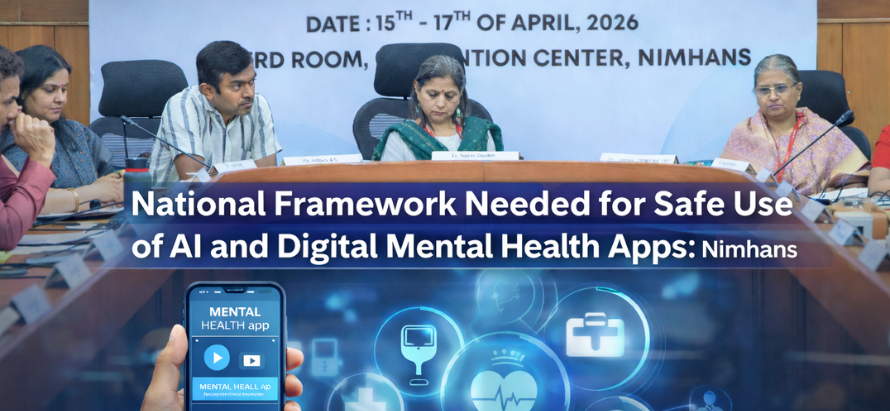
A high-level national consultation led by the National Institute of Mental Health and Neurosciences (Nimhans), Bengaluru, has strongly recommended the creation of a dedicated national regulatory framework for digital mental health tools, including AI-powered apps, chatbots, teletherapy platforms, and wearable mood trackers. The consultation highlighted risks of unverified claims, data privacy breaches, lack of clinical validation, and potential harm to vulnerable users, urging the government to establish clear standards for safety, efficacy, and ethical use.
Glimpse:
Held on January 22, 2026, the Nimhans consultation brought together psychiatrists, digital health experts, policymakers, patient advocates, and tech developers. Participants called for mandatory registration, clinical validation, risk classification, data protection safeguards, and transparent efficacy claims for all digital mental health interventions. The group emphasised the urgent need for guidelines similar to those for medical devices, especially as AI chatbots and self-help apps proliferate without oversight, potentially leading to misdiagnosis, delayed professional care, or privacy violations.
A national consultation organised by the National Institute of Mental Health and Neurosciences (Nimhans), Bengaluru, has recommended the urgent development of a comprehensive regulatory framework for digital mental health tools in India. The meeting, held on January 22, 2026, gathered leading psychiatrists, digital health researchers, policymakers from the Ministry of Health and Family Welfare, representatives from the National Health Authority, patient advocacy groups, and technology developers to address the growing concerns around unregulated mental health apps, AI chatbots, teletherapy platforms, and wearable devices.
Participants noted that the digital mental health space has expanded rapidly in recent years, with thousands of apps claiming to offer therapy, mood tracking, anxiety management, and even diagnosis. However, most lack rigorous clinical validation, clear evidence of efficacy, or proper data protection measures. Several tools have been found to make unsubstantiated claims, collect sensitive mental health data without adequate consent, or use algorithms that may reinforce stigma or provide harmful advice.
The consultation strongly advocated for a national regulatory framework that would:
- Classify digital mental health tools based on risk level (low, moderate, high)
- Mandate clinical validation and evidence requirements before market approval
- Require registration with a designated authority (possibly CDSCO or a new digital mental health cell)
- Enforce strict data privacy and security standards in line with the Digital Personal Data Protection Act
- Ensure transparency in algorithmic decision-making and clear disclaimers that apps are not substitutes for professional care
- Establish mechanisms for post-market surveillance and grievance redressal
Dr. Pratima Murthy, Director of Nimhans, who chaired the consultation, stressed the vulnerability of users seeking mental health support:
“Digital tools can play a supportive role in mental healthcare, but when they promise diagnosis or treatment without proper oversight, they risk causing harm. We need a balanced regulatory approach that encourages innovation while protecting users, especially young people and those in distress.”
The group also recommended collaboration between mental health professionals, technologists, and regulators to develop India-specific guidelines that account for linguistic diversity, cultural context, and varying levels of digital literacy. Special attention was urged for tools targeting children, adolescents, and vulnerable populations.
The recommendations are expected to feed into ongoing policy discussions at the Ministry of Health and the National Health Authority, potentially leading to formal guidelines or amendments to existing medical device rules in the coming months.