The Union Ministry of Health and Family Welfare has strongly advised the Andhra Pradesh government to prioritise public-private partnerships (PPPs) as the primary mechanism for scaling healthcare infrastructure across the state. The recommendation came during a detailed review meeting held in New Delhi in mid-January 2026, where central officials presented data showing that Andhra Pradesh lags behind several peer states in per-capita hospital beds, availability of super-specialty services, and diagnostic capacity particularly in rural and tribal districts.
Andhra Pradesh currently operates a network of government medical colleges, district hospitals, area hospitals, community health centres, and primary health centres, but rapid population growth, urbanisation, and rising burden of non-communicable diseases have outpaced public sector capacity expansion. The Centre highlighted that PPPs offer a faster, capital-efficient path to bridge this gap by leveraging private sector expertise, technology, and investment while retaining government oversight on affordability and equity.
Successful PPP models cited during the discussion include Gujarat’s extensive network of PPP-run district hospitals and diagnostic centres, Karnataka’s collaboration with private players for high-end imaging and dialysis services, and Tamil Nadu’s PPP-driven cancer care and tertiary facilities. These examples have demonstrated faster project execution, better equipment utilisation, improved patient satisfaction, and reduced fiscal burden on the state exchequer compared to fully government-funded builds.
The Union Health Ministry has offered concrete support to Andhra Pradesh, including technical assistance in project structuring, viability gap funding under existing central schemes, model concession agreements, and guidance on integrating PPP facilities with Ayushman Bharat entitlements to ensure cashless care for eligible beneficiaries. Officials stressed that PPPs must adhere to strict quality standards, price caps on essential services, and performance-linked payments to prevent profiteering and protect vulnerable populations.
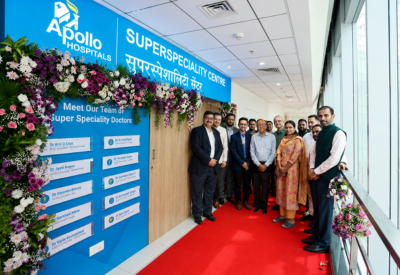
Andhra Pradesh Health Minister Vidadala Rajani welcomed the Centre’s guidance and confirmed that the state is actively exploring PPP opportunities for upgrading district hospitals, establishing super-specialty blocks, expanding dialysis and oncology services, and setting up advanced diagnostic labs in underserved regions. The state government is preparing a pipeline of bankable PPP projects that will be presented to potential private partners in the coming months.
The advisory aligns with the national priority of achieving universal health coverage under Ayushman Bharat and reflects the Centre’s growing emphasis on PPPs as a pragmatic tool to meet the massive infrastructure needs of populous states without over-relying on public funds alone.